205 NORTH QUAY TOWER
Brisbane, Australia
CLIENT Cbus
PROGRAM Class A high-rise office building, with premium services (auditorium, meeting rooms, outdoor swimming pool, wellness, end-of-trip amenities, and sky-terrace), restaurant, retail, and below-grade parking
AREA 73,000 m2 (786,000 sf)
SUSTAINABILITY 6 Star ‘Green Star,’ NABERS Energy 5.5 Star
COST US$457 million
STATUS Invited competition, first prize 2019; completed 2025
ARCHITECTS Hassell, REX, Richards & Spence
PERSONNEL Maur Dessauvage, Nazli Ergani, Matan Gal, Britt Johnson, Jarod Poenisch, Joshua Ramus, Raúl Rodríguez García (PL), Emma Silverblatt, Elina Spruza Chizmar, Yuxuan Tu, Teng Xing
CONSULTANTS Able Security, Access, Acoustic Logic, ADG, Altitude Facade, AMPFLO, Apex, Arcadia, Arup, Certis, Cundall Johnson & Partner, Bennett & Bennett, BG&E, Diversified, Ellis Air, EMF Griffiths, Firerite Services, Floth, Front, Greencap, GTA, JHA, MBA, Magnusson Klemencic, Multiplex, Perigon, RWDI, Schindler, Thwaite, TTM, Urbanite, Urbis, VAE, WSP, ZFS
CONTRACTOR Hutchinson
COMPETITION PERSONNEL Dylan Bachar, Maur Dessauvage, Álvaro Fernández Gómez-Selles, Nicolas Lee, Araceli López, Michael Paraszczak, Joshua Ramus, Raúl Rodríguez García (PL), Alfonso Simelio Jurado, Xuancheng Zhu
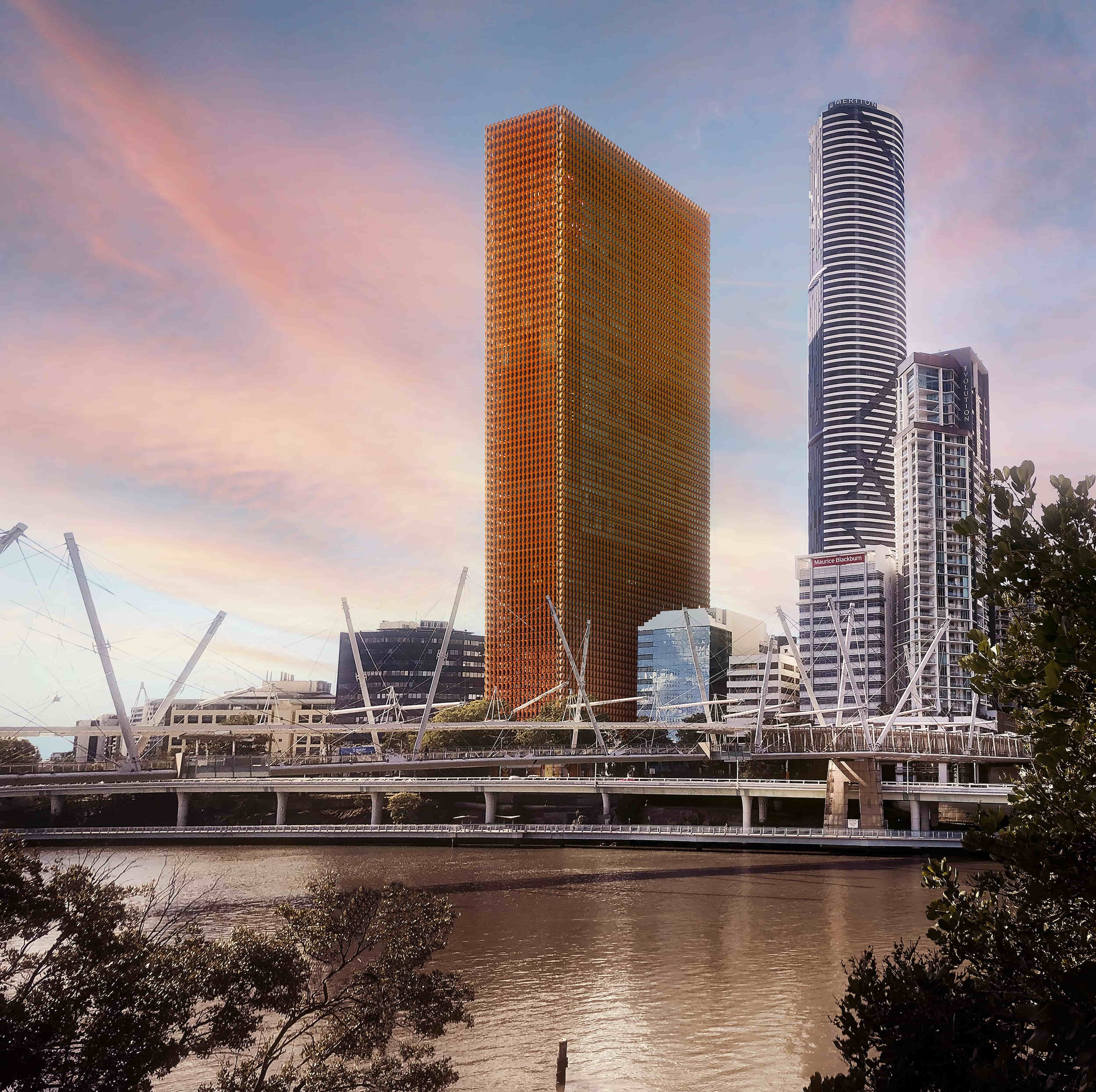
205 North Quay asserts its commercial value not by willful form, but by shrink-wrapping a slender, highly efficient structure in an equally efficient, state-of-the-art enclosure tailored to Brisbane’s subtropical climate.
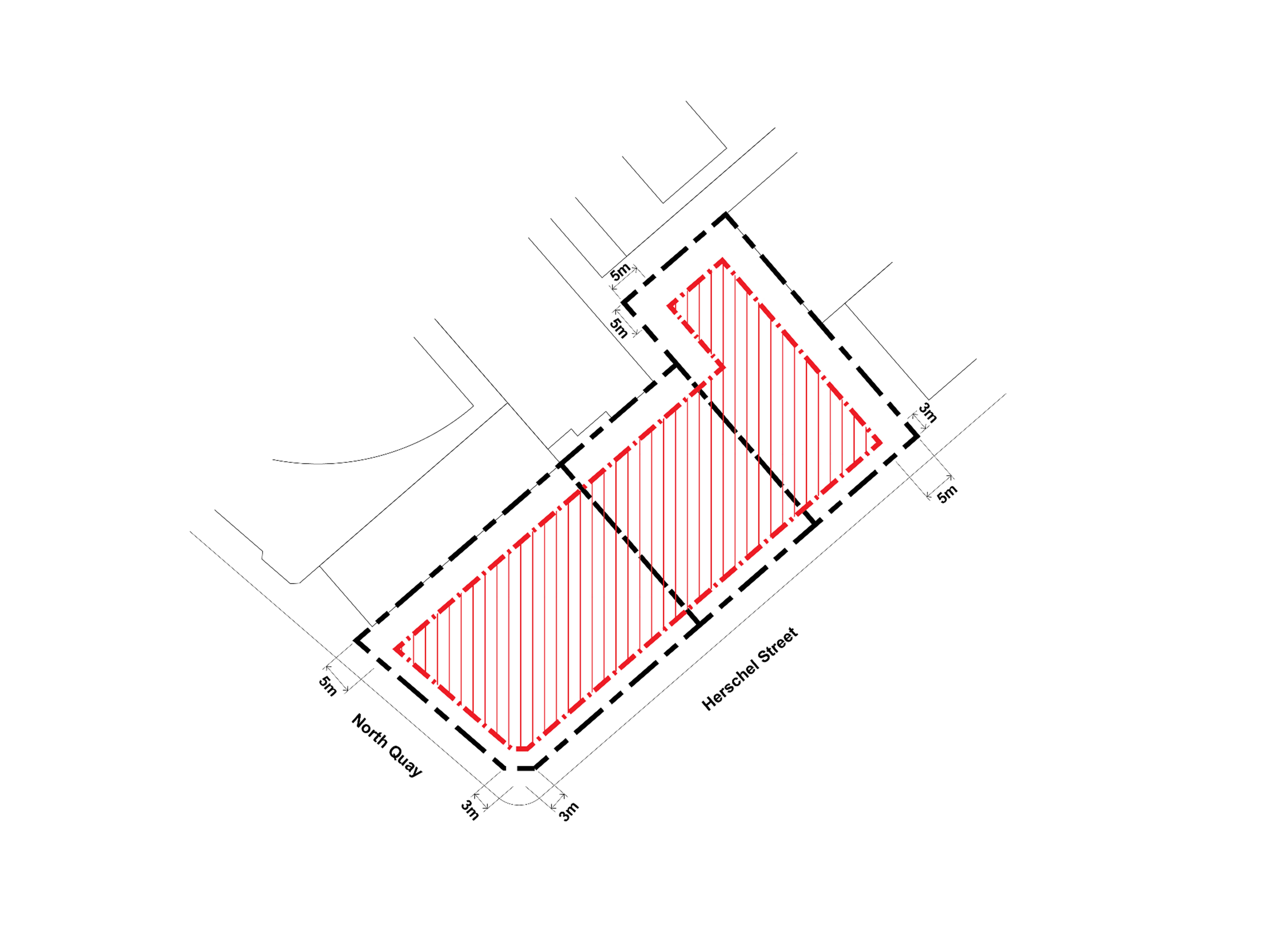
The aggregated plots constituting the building’s site form an ‘L’ shape, which—after required setbacks are applied—generates a northwestern leg too small to organize the building’s main mass.
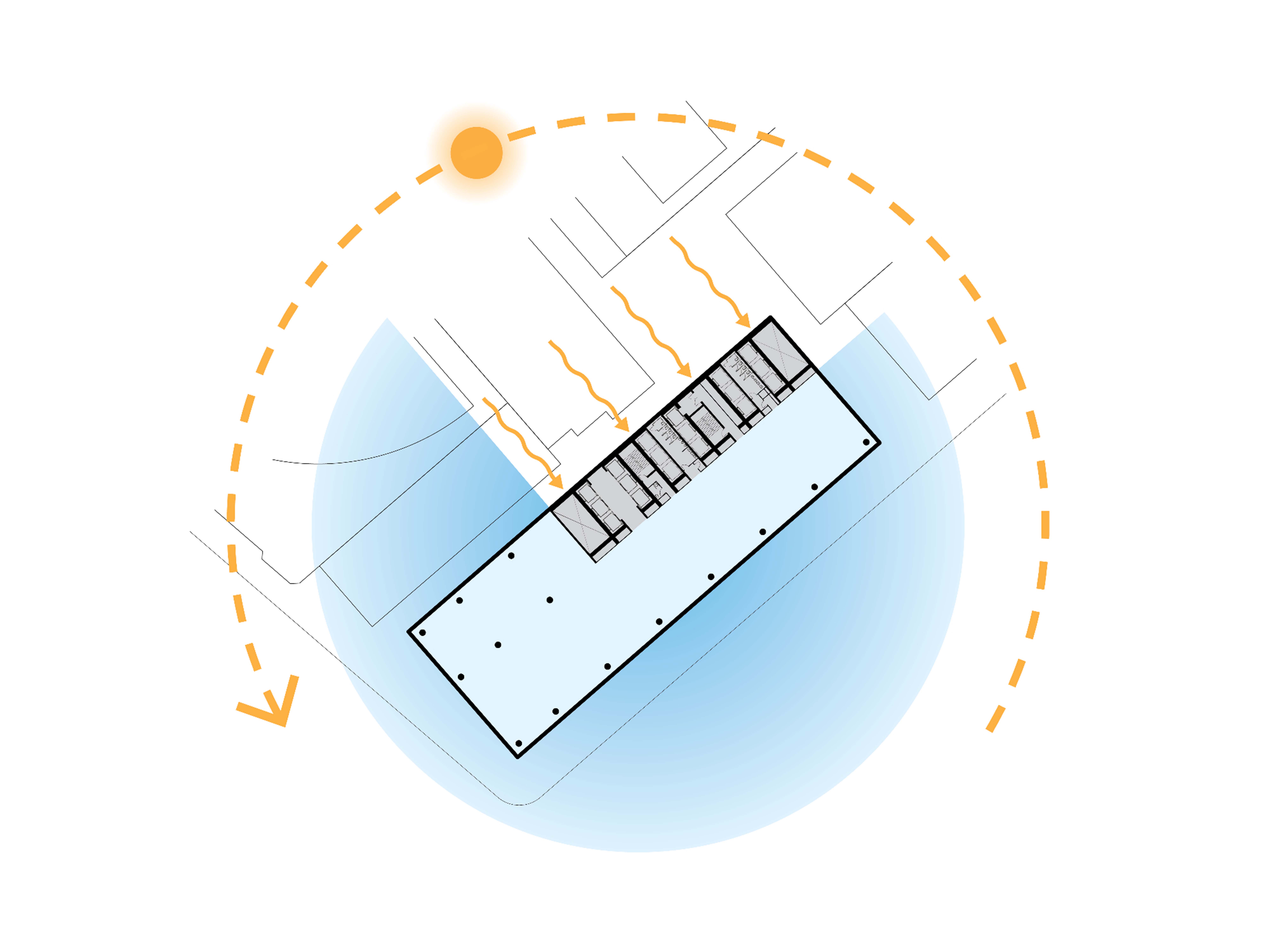
205 North Quay, therefore, adopts a pure 74 m x 26 m extruded form. Its core, occupying the northern quadrant of its rectangular plan, creates a large, contiguous office floorplate that takes advantage of southern views of the Brisbane River and South Bank’s cultural district. Its asymmetrical position also provides shading from Brisbane’s harsh northwest sun and maximizes usable area at the retail and lobby levels along its southeast street frontage.
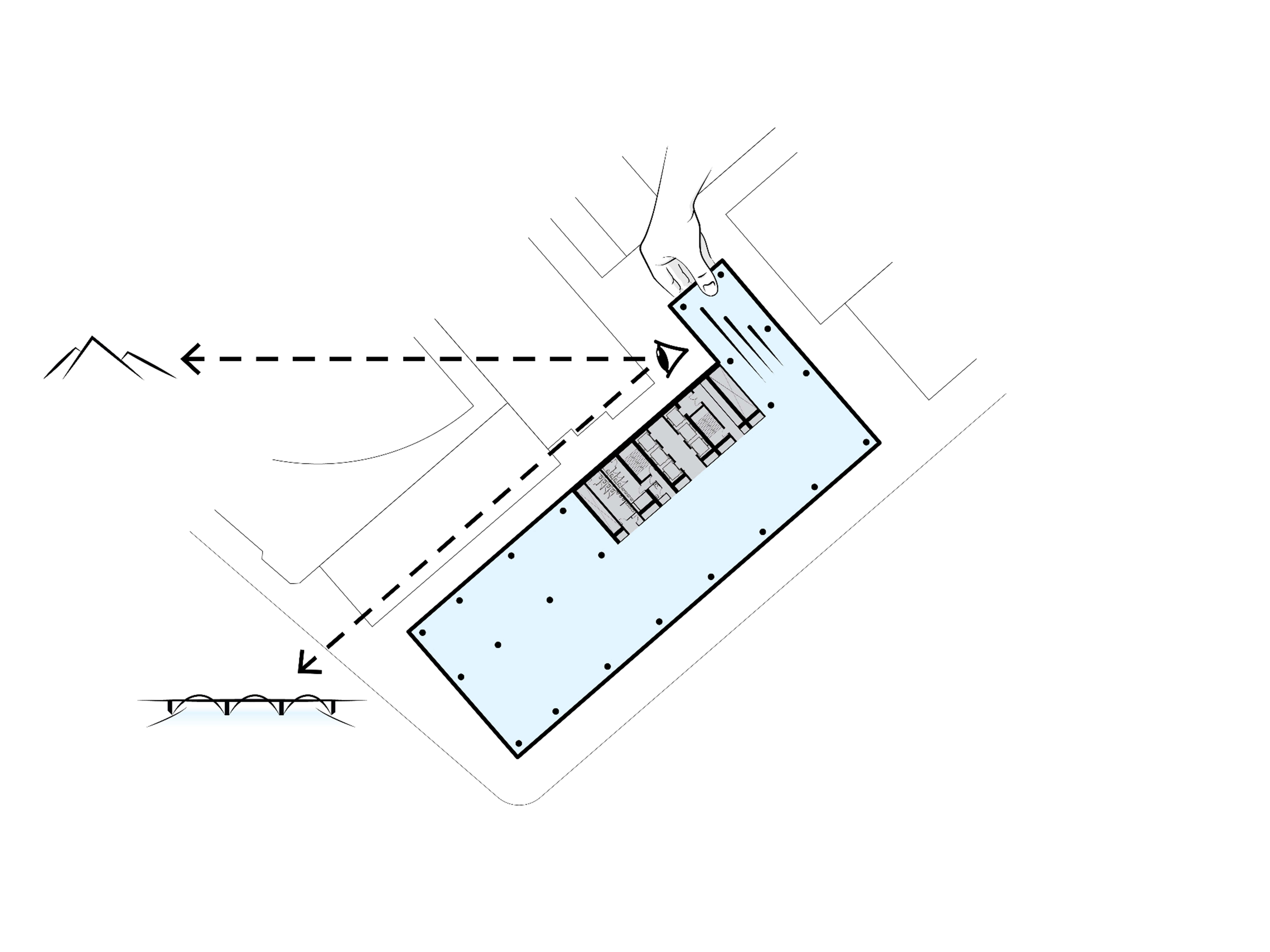
By extending the northernmost structural bay of the high-rise floorplates (after the mid-rise portion of the core terminates) into the site’s northwestern leg, remarkable office space—with an intimate, private proportion—is created with direct views down Brisbane River’s southwestern stretch and to Mount Coot-Tha.
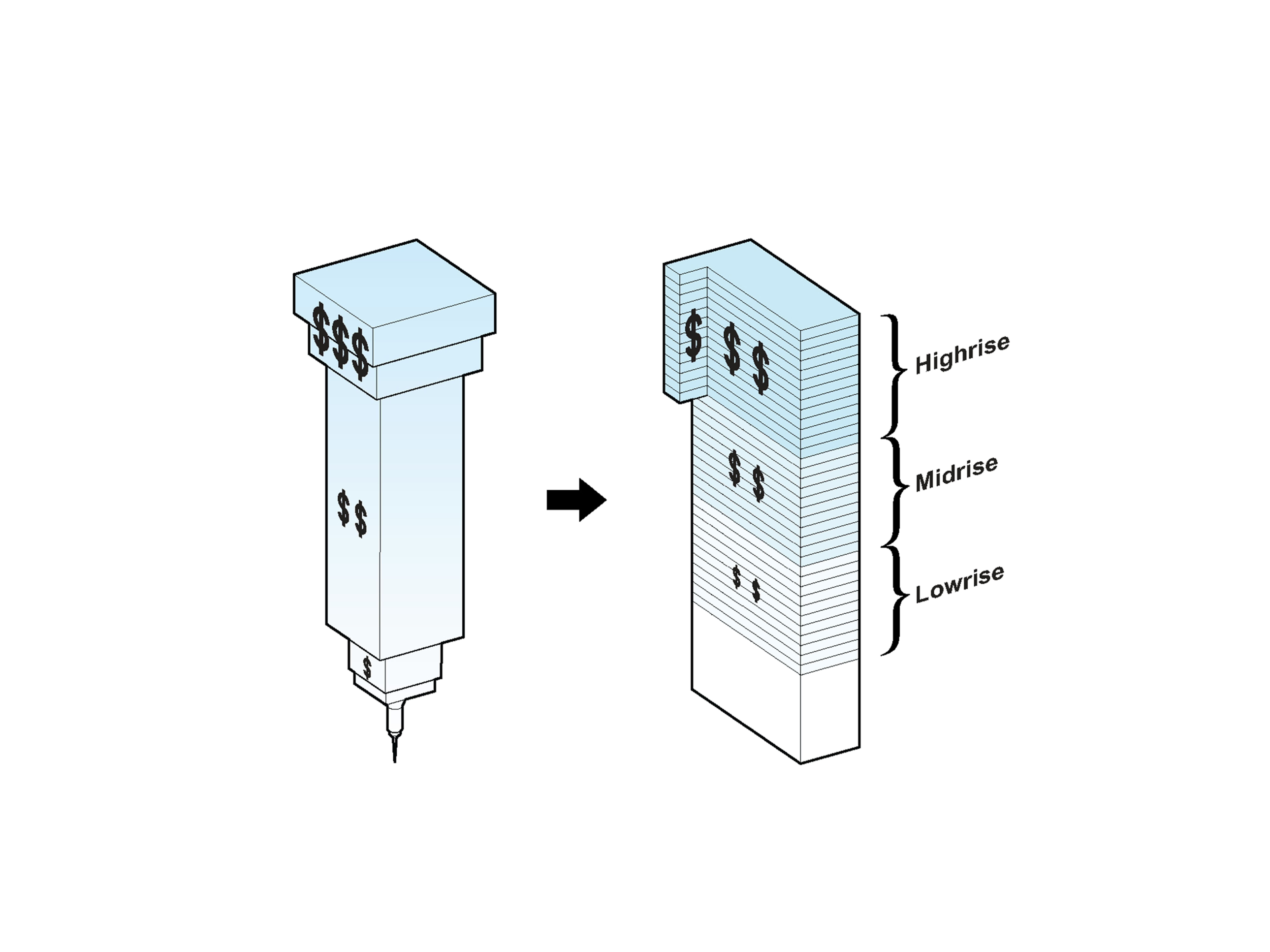
The resulting building maximizes leasable area where it is most valuable, while respecting setbacks and adopting most of a typical tower’s conventions.
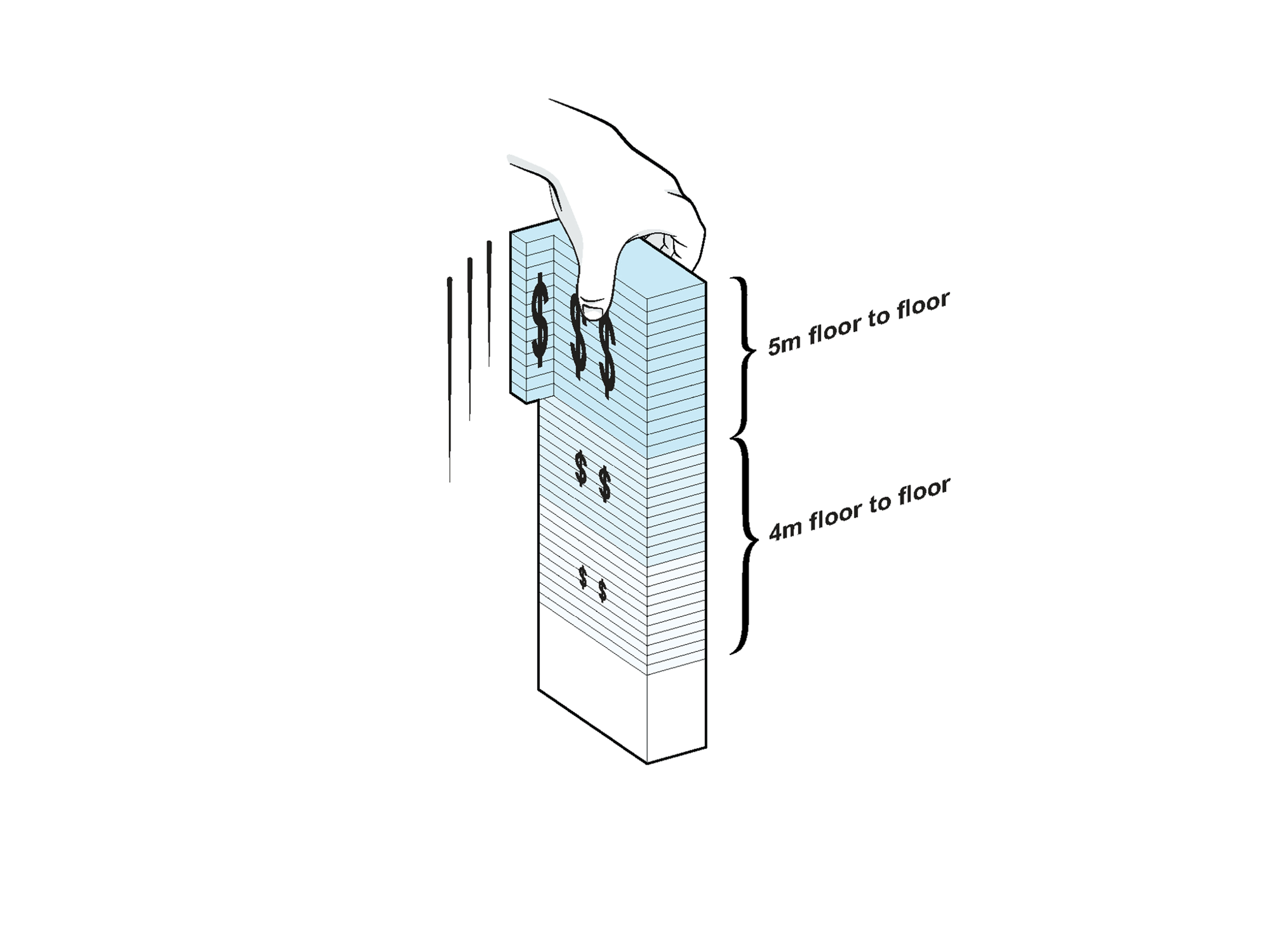
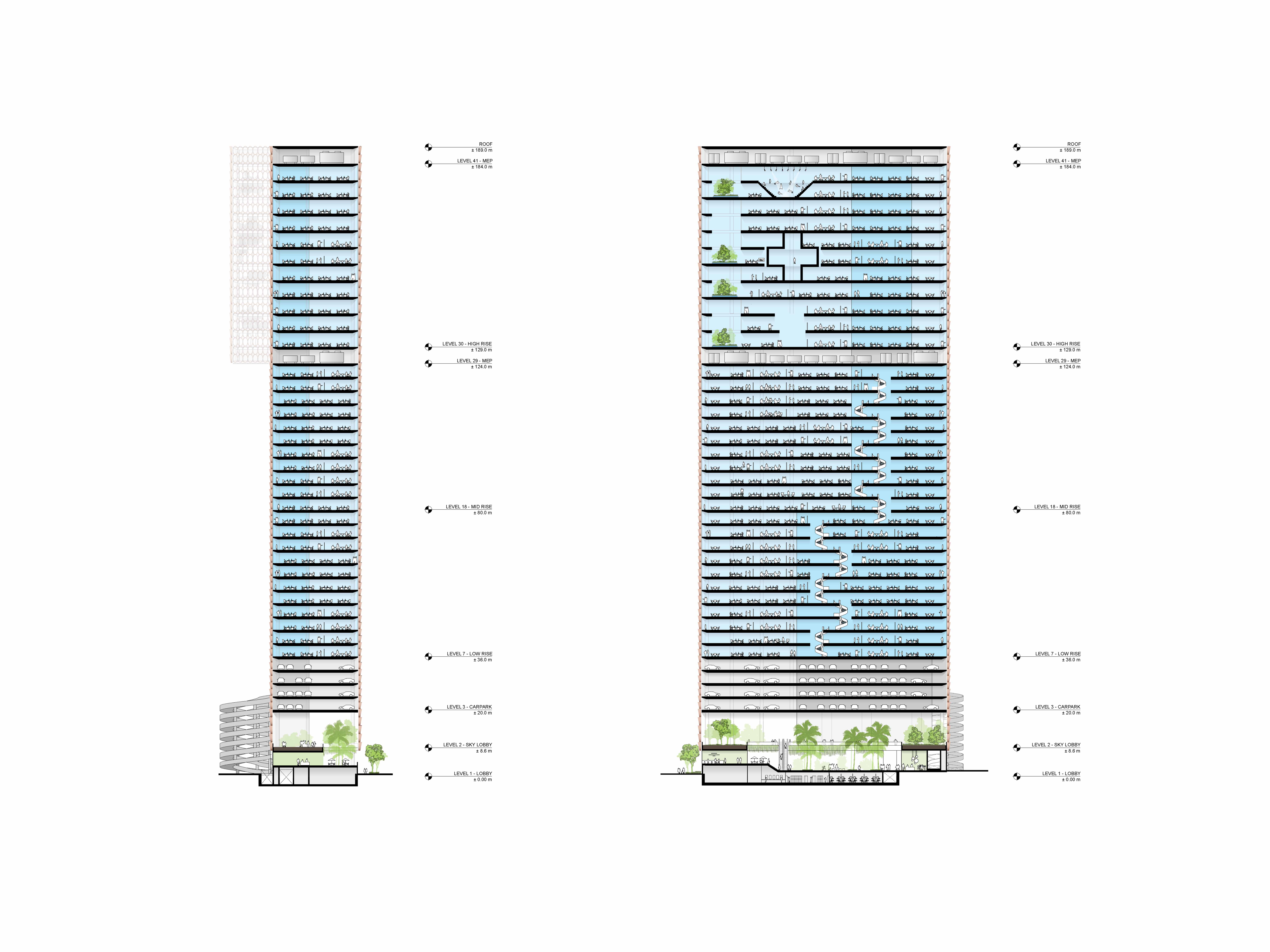
To further increase the high-rise floors’ lease rates, their height is increased to 5 m floor-to-floor from the standard 4 m floor-to-floor speculative office height of the low- and mid-rise floors.
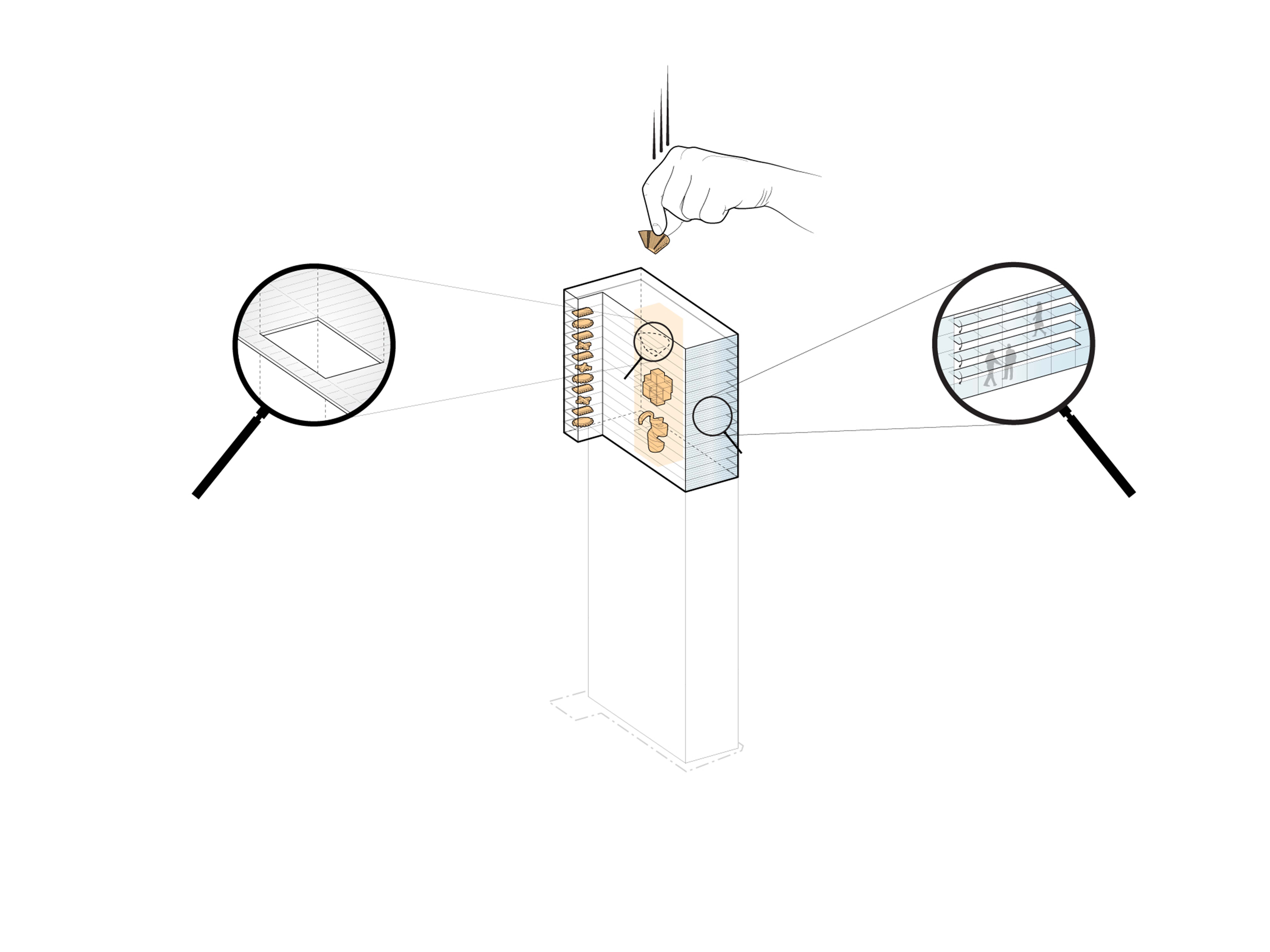
Catering to boutique tenants within these floors, multi-story volumes, vertical connections, and other signature spaces can be constructed in two of the southeastern structural bays (where views are most impressive) due to interior beams with bolted connections and removable floor decking panels. An operable façade composed of jalousie windows is also included on the southwestern elevation to enable winter gardens, if desired. These elements, along with the cantilever, define the bespoke character of North Quay Tower’s high-rise typology.
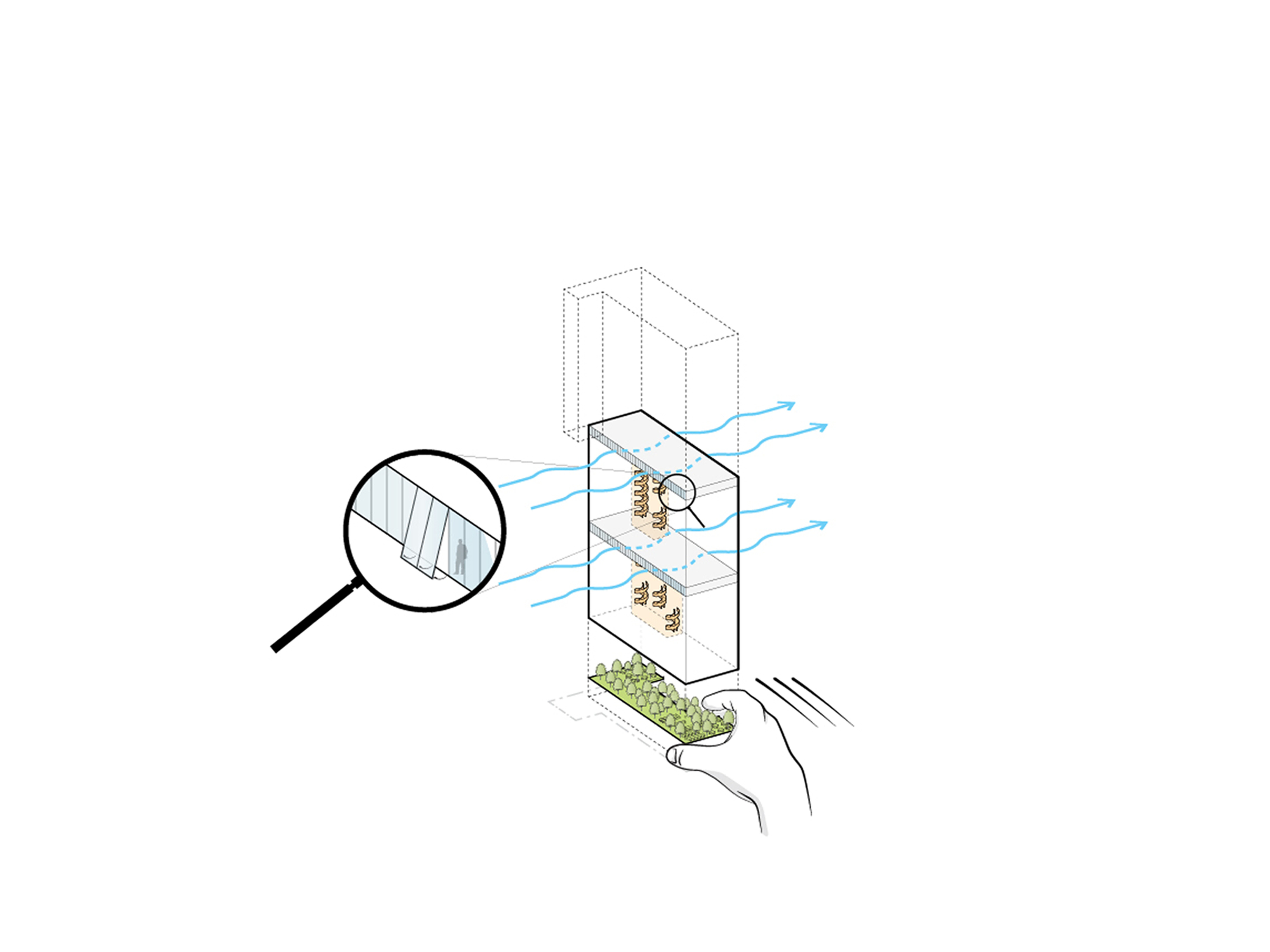
To provide amenity and diversity for the low- and mid-rise floors—likely to be occupied by a single, large tenant—a lush arbor is inserted 7.5 m above ground-level retail, integrated with the office lobby.
The arbor is an oasis at the nexus of The City and the Caxton Street Districts, with views of the river over the Riverside Expressway. Additional features defining this office typology include two ‘breathable’ floors (with operable awning-style windows) and structural ‘soft spots’ adjacent to the core that enable primary and transition stairs at will up the height of the low- and mid-rise sections.
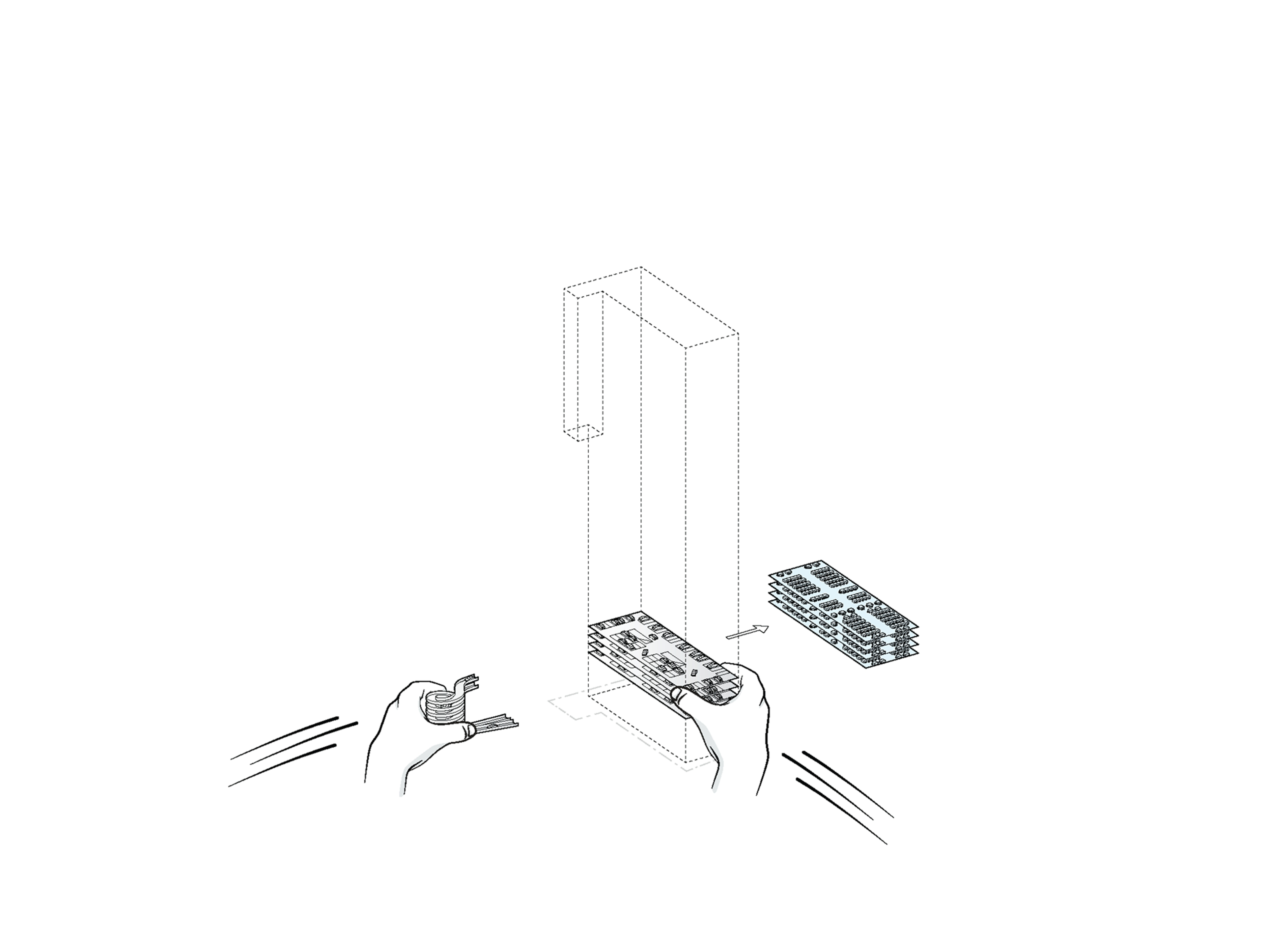
Four floors of parking are interleaved just above the office lobby, conforming to the tower’s dimensions and the standard 4 m floor-to-floor height, so these levels can be retrofitted to offices as the future of mobility evolves.
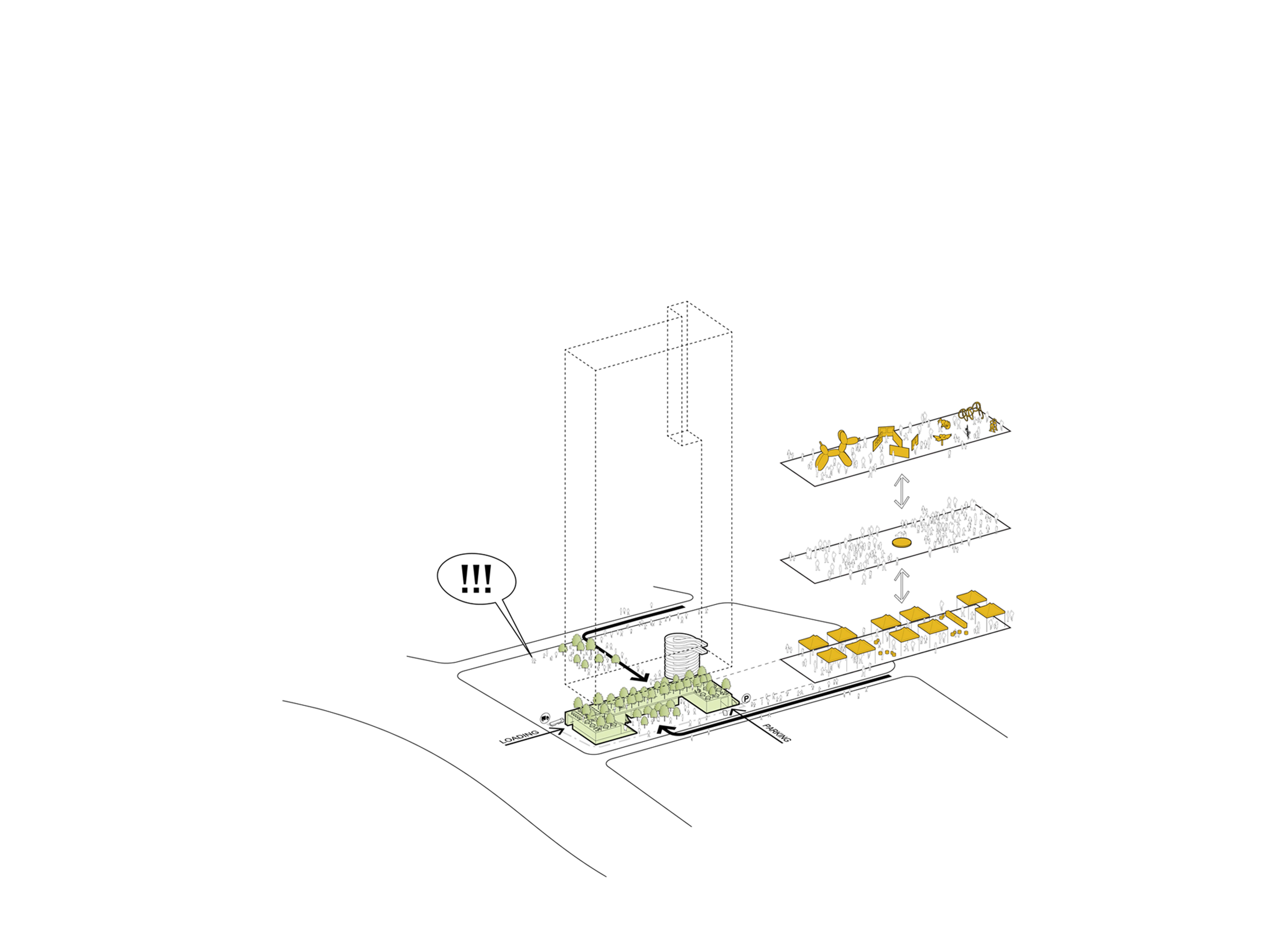
At grade, the tower forms a protected plaza off Herschel Street, a cocoon flanked by inward-facing retail on both sides. The plaza features bold in-ground planting designed to accommodate a variety of activities, from markets to exhibitions to performances. The northeastern bank of retail continues through the building along the lane, reinforcing the pedestrian connection to Roma Street Station. Entries to parking and loading are off Herschel Street and North Quay, respectively, to minimize negative impact on pedestrian flows.
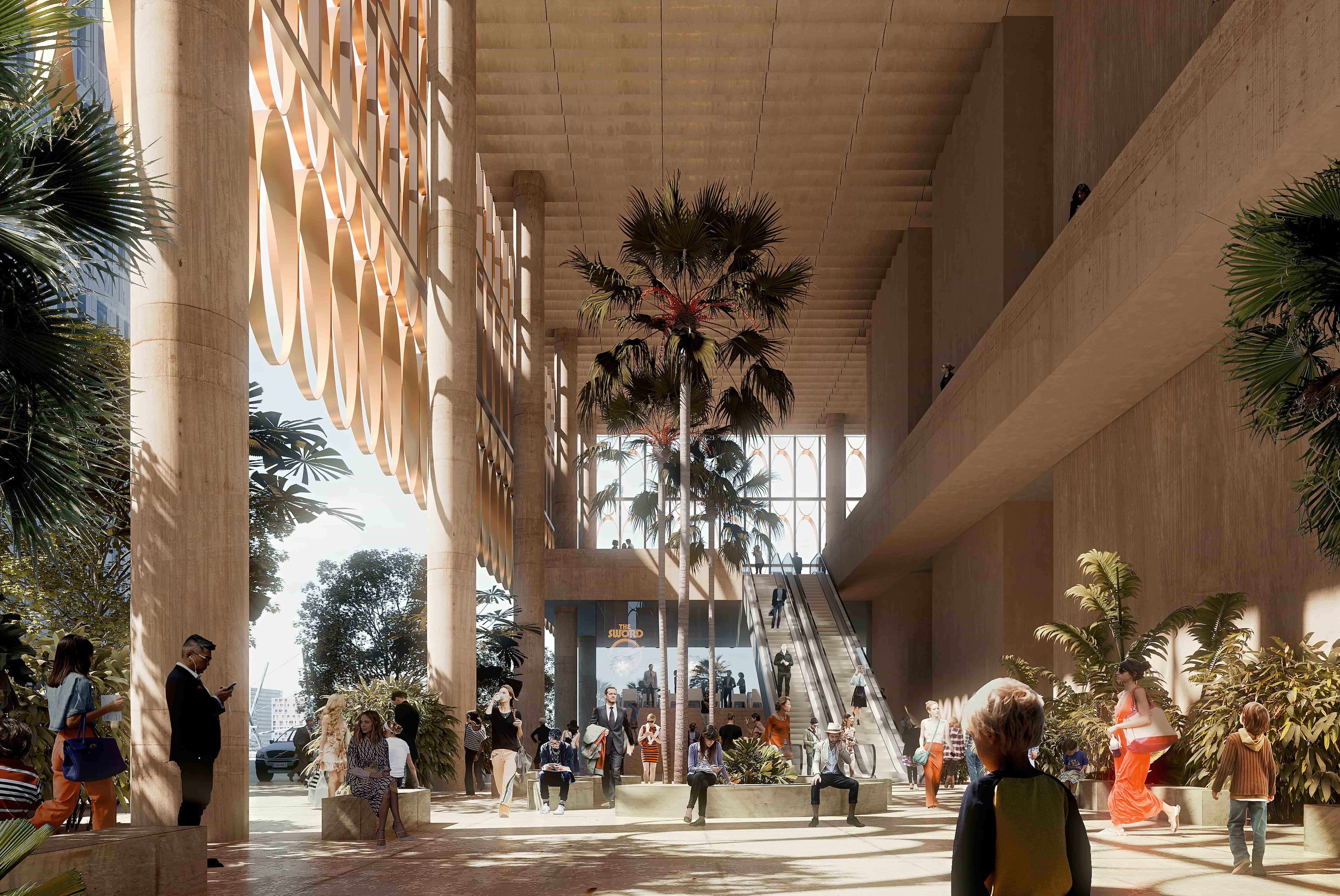
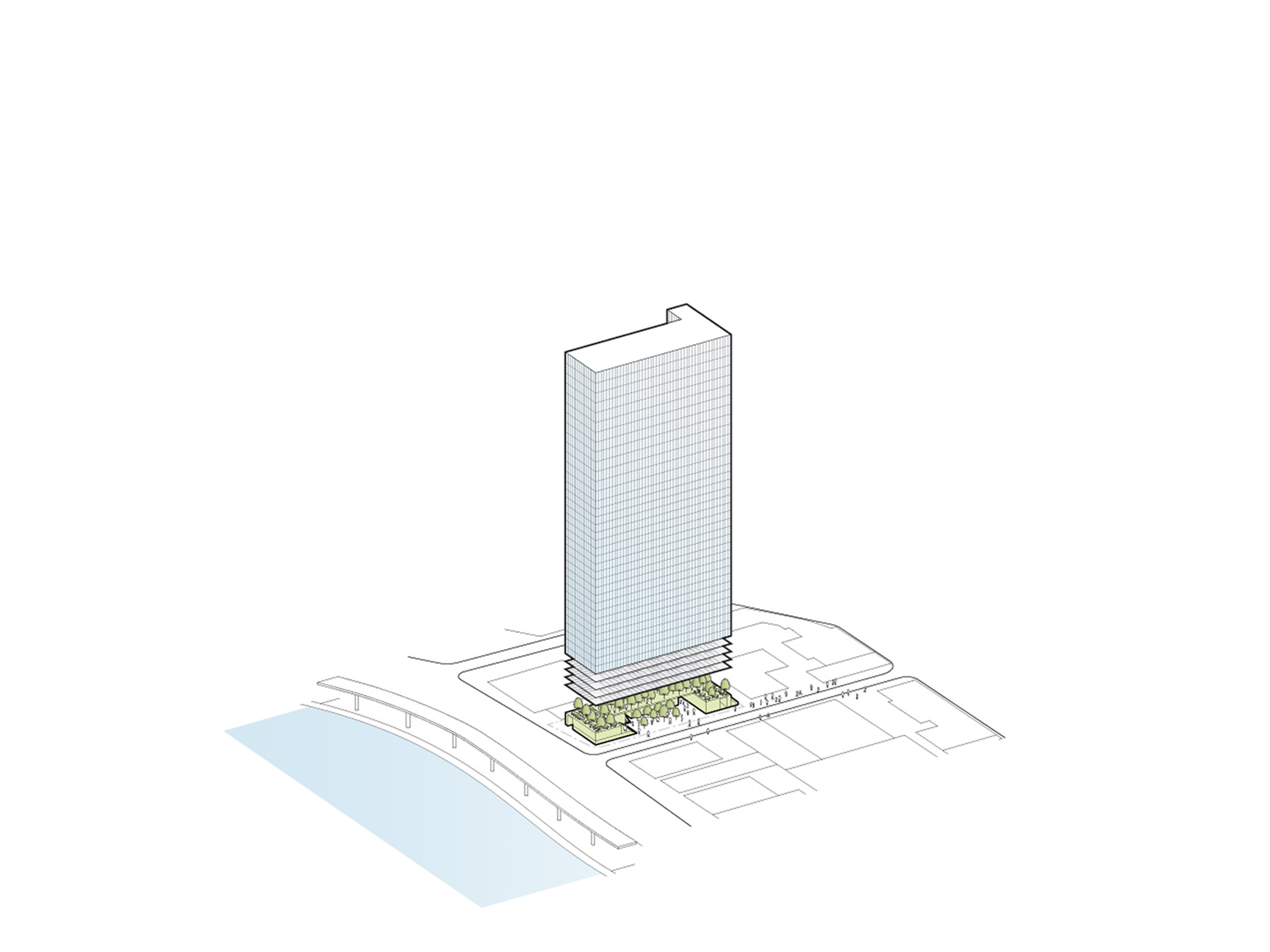
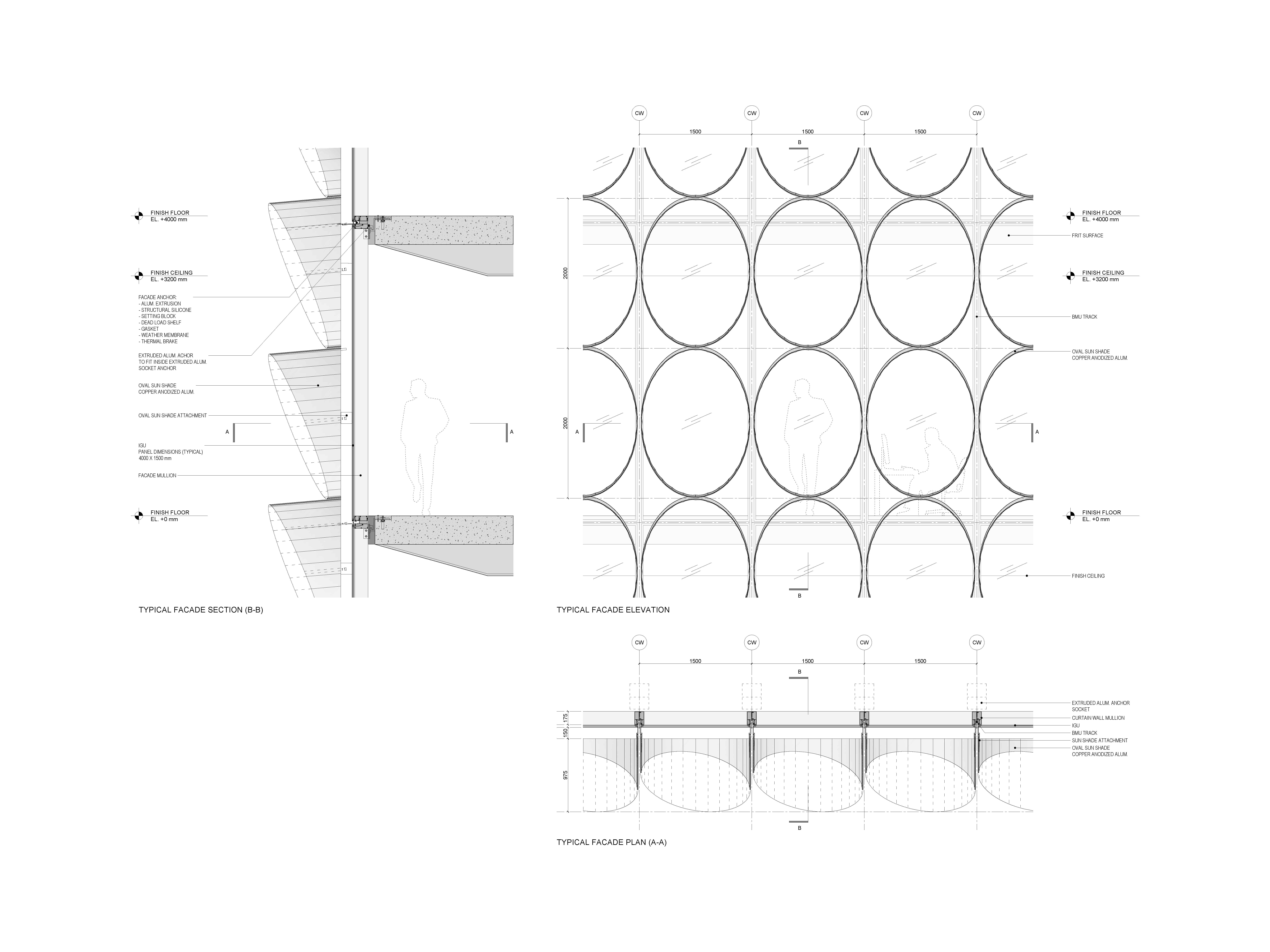
Continuing its commitment to efficiency, views, and light penetration, the entire edifice is wrapped in a conventional silicone-glazed curtain wall on a standard 1.5 m module. Its color-neutral double-glazing is highly transparent, with a Visual Light Transmission (VLT) of 0.62. The last meter of the ceiling is tapered to the façade to increase daylight penetration and rental value.
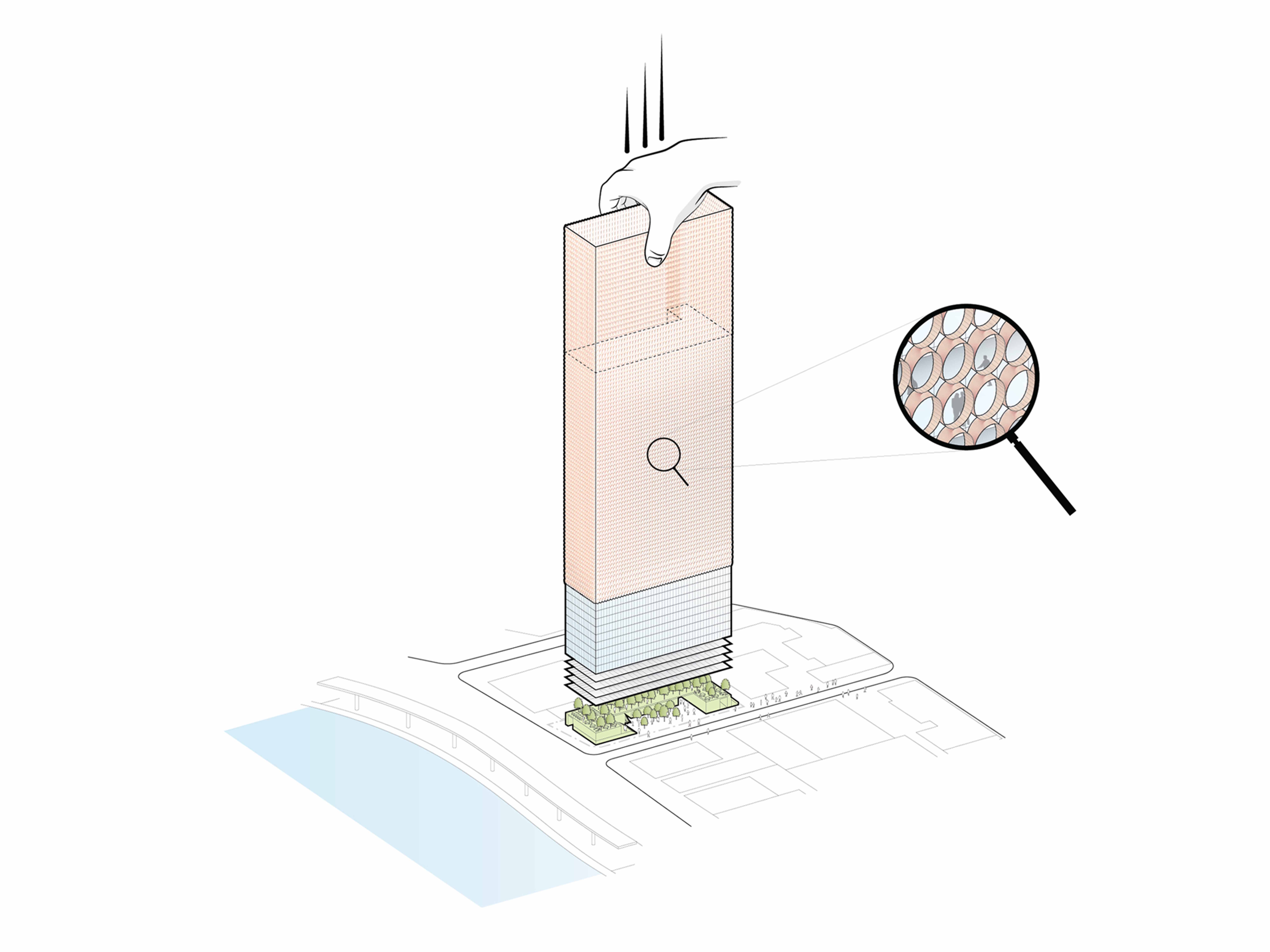
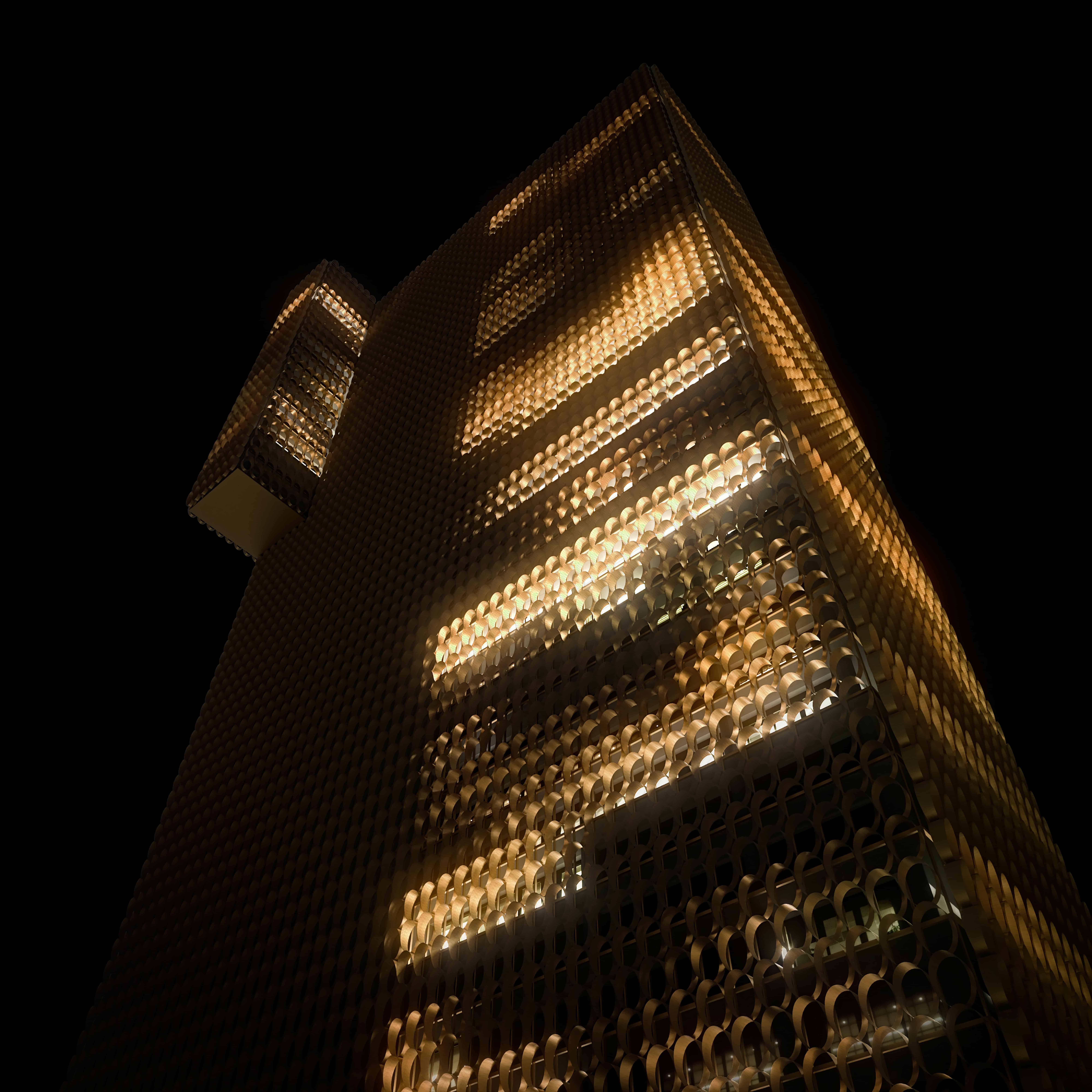
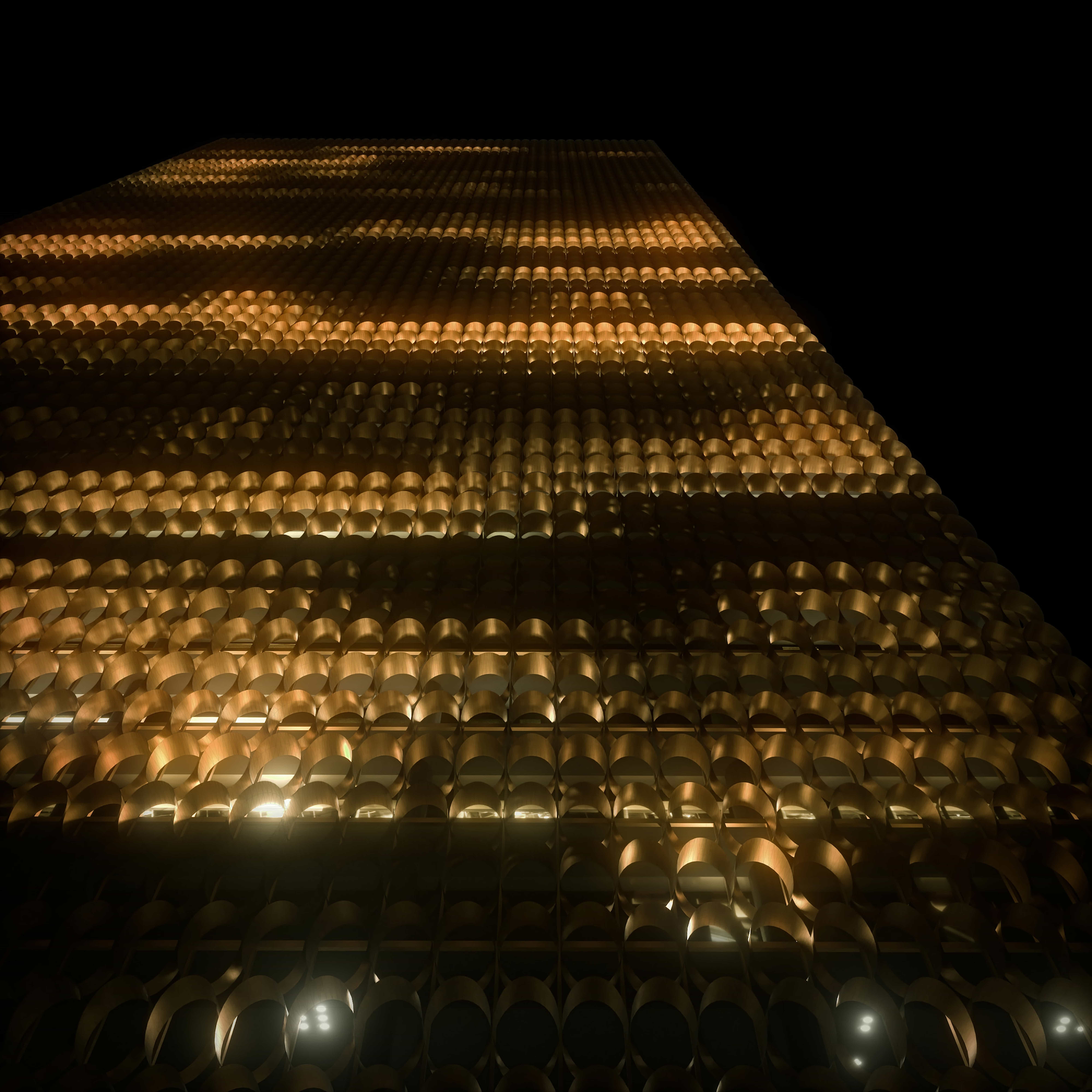
Enabling the façade’s high glazing ratio, high VLT, good interior lighting, and color rendition, the building is veiled in a copper-anodized, extruded-aluminum sunscreen composed of large ovals. The ovals’ rolled shading surface leverages geometric rigidity to use less material than conventional fins and overhangs while also blocking more solar heat gain. The design requires only four extrusion dies, which are then mirrored to complete each tube. The pitch of the oval cuts is optimized for solar exposure on each facade orientation with minimal projection depth.
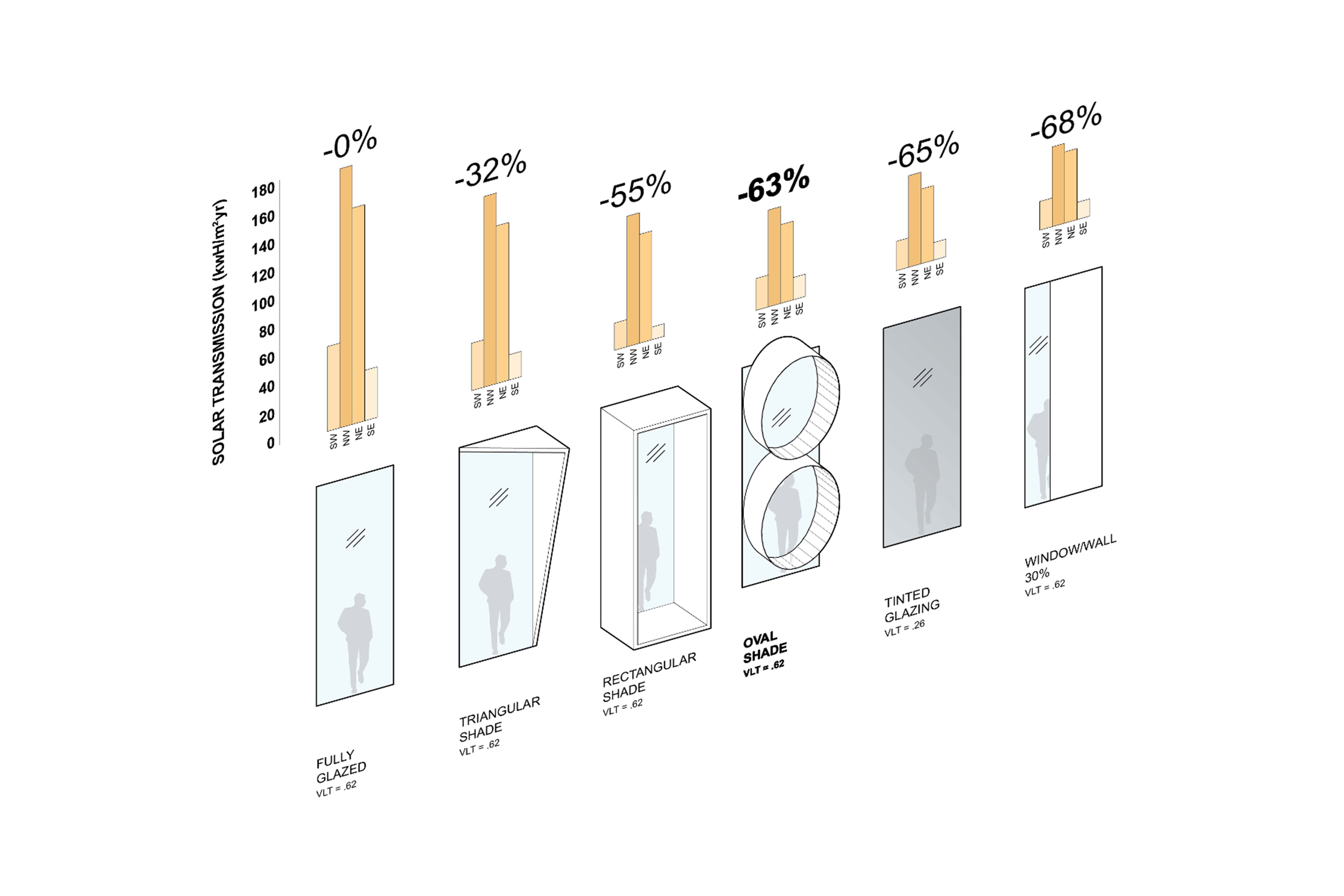
The shading performance of the tailored ovals is comparable to that of a fully glazed design using heavily tinted glass or a low window-to-wall ratio design. The ovals block more direct solar gain from the critical north and west orientations than conventional triangular or rectangular shading overhangs and fins, and solar transmission is reduced by 63% as compared to an unshaded curtainwall.