
THE LINDEMANN PERFORMING ARTS CENTER AT BROWN UNIVERSITY
Providence, Rhode Island
AWARDS iF Design Awards, Gold Award, 2026; American Institute of Architects New York (AIA NY), Merit Award, 2025; Design Educates Awards, Silver Prize, Architectural Design, 2025; International Design Awards, Silver Award, Cultural Architecture, 2025; International Design Awards, Silver Award, Educational Architecture, 2025; Society of American Registered Architects (SARA), National Cultural Award, 2025; Society of American Registered Architects (SARA), National Excellence Award, 2025; The Architect’s Newspaper, Best of Design Awards, Editors’ Pick, 2024; American Institute of Architects Rhode Island (AIA RI), Honor Award, 2023; The Chicago Athenaeum Museum of Architecture & Design, The American Architecture Award, 2021; Architizer, A+ Awards, Finalist, 2019
CLIENT Brown University
PROGRAM University performing arts center, including main hall with five radically different preset spatial, acoustic, and technical configurations—Experimental Media, Recital (388 seats), End Stage (275 seats), Orchestra (530 seats), and Flat Floor—and orchestra rehearsal/performance space (135 seats); dance rehearsal/performance space (98 seats); theater rehearsal /performance space (50 seats); practice rooms; and typical front- and back-of-house spaces
AREA 11,000 m2 (118,000 sf)
SUSTAINABILITY LEED Silver equivalent
COST US$182 million
STATUS Completed 2023
ARCHITECT REX
PERSONNEL Tim Carey, Adam Chizmar (PL), Maur Dessauvage, Alvaro Gomez-Selles, Kelvin Ho, Sebastian Hofmeister (PL), Lara Isaac, Nicolas Lee, Alfonso Simelio Jurado, Kelsey Olafson, Joshua Ramus, Davis Richardson, Raúl Rodríguez García, Anne Strüwing, Kevin Thomas (PL), Matthew Uselman, Teng Xing
CONSULTANTS Arup, Atelier Ten, Cost Plus, Front, GEI, Jensen Hughes, L’Observatoire, Magnusson Klemencic, Odeh, Skyline, Soberman, Stephen Turner, Stimson, Studio Loutsis, Theatre Projects, Thornton Tomasetti, Threshold, Vanasse Hangen Brustlin, Woodard & Curran
CONTRACTOR Shawmut
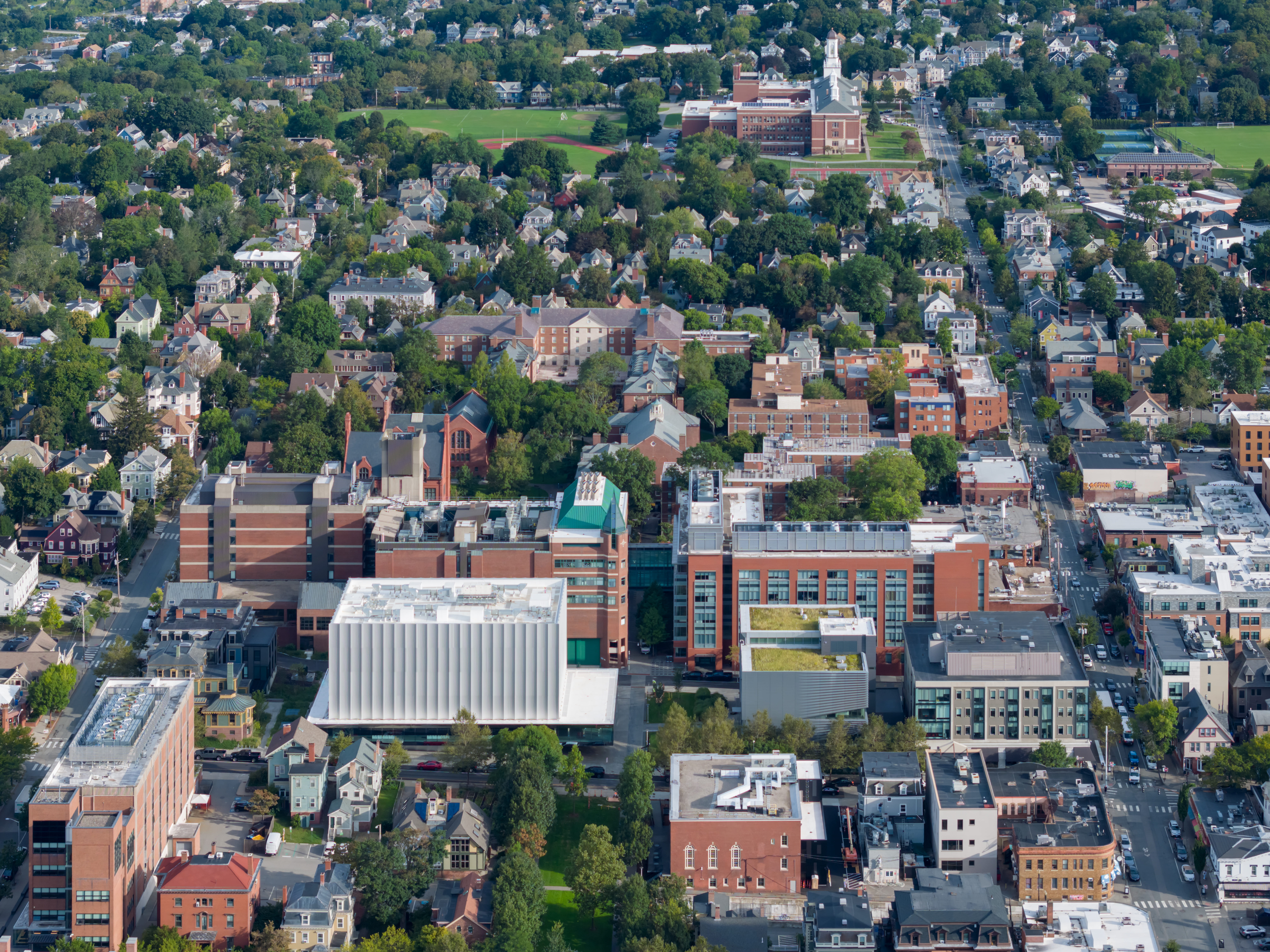
Brown University aspires to be a worldwide destination for students who want to fully integrate performing, visual, and literary arts into a complete liberal arts education. Implementing this aspiration, the Brown University Arts Institute (BAI) supports all things experimental, forward-thinking, and cutting-edge in the arts; facilitates collaboration across arts departments and other academic fields; and engages activist artists and scholars whose work responds to contemporary issues.
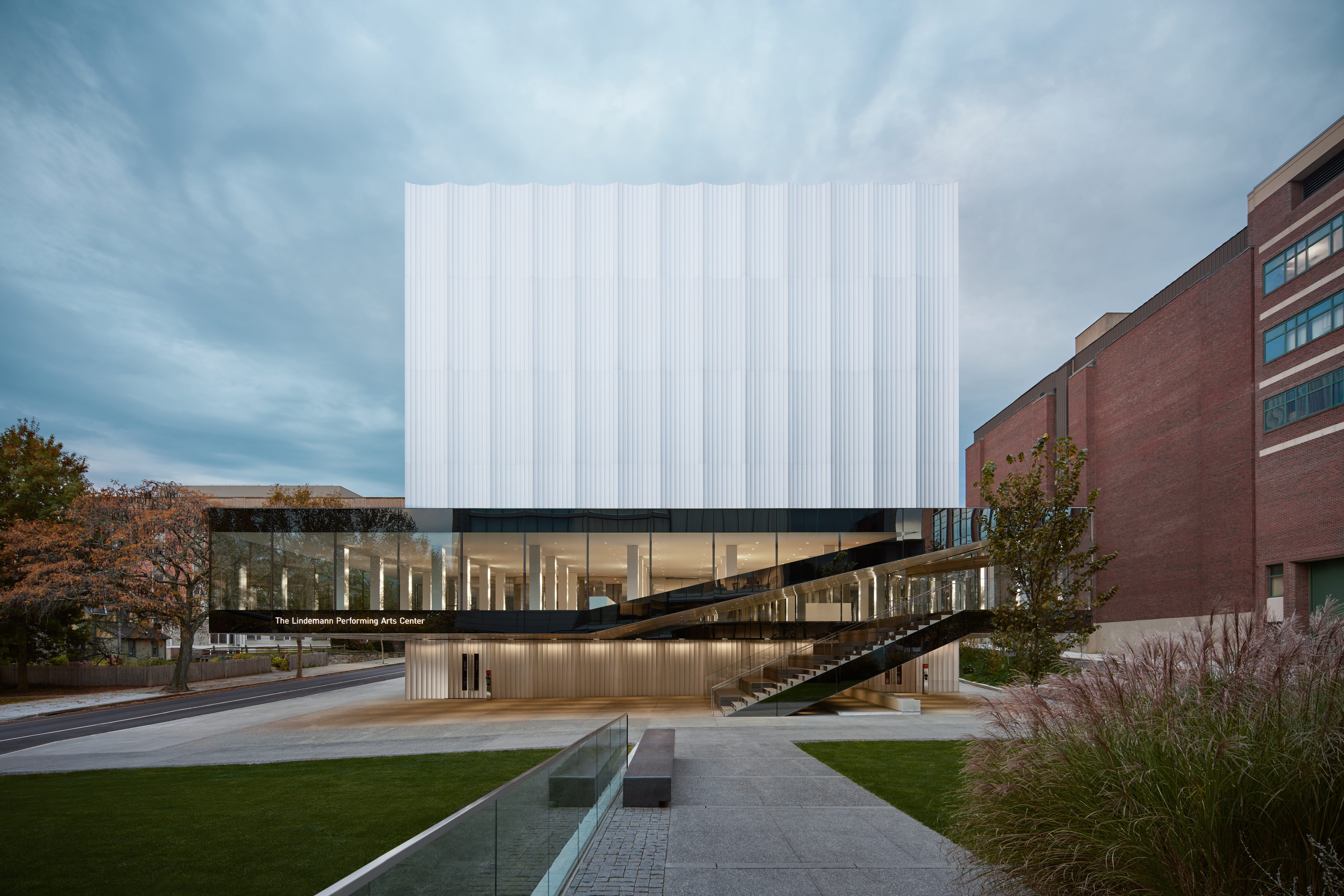
The Lindemann Performing Arts Center (The Lindemann) is the physical manifestation of BAI’s vision, a new kind of creative “instrument,” radically flexible yet extremely precise, for explorations in music, theater, dance, and media. At The Lindemann, performance is not the final product but another piece of vital research in the creation—and pedagogy—of groundbreaking art and arts leaders.
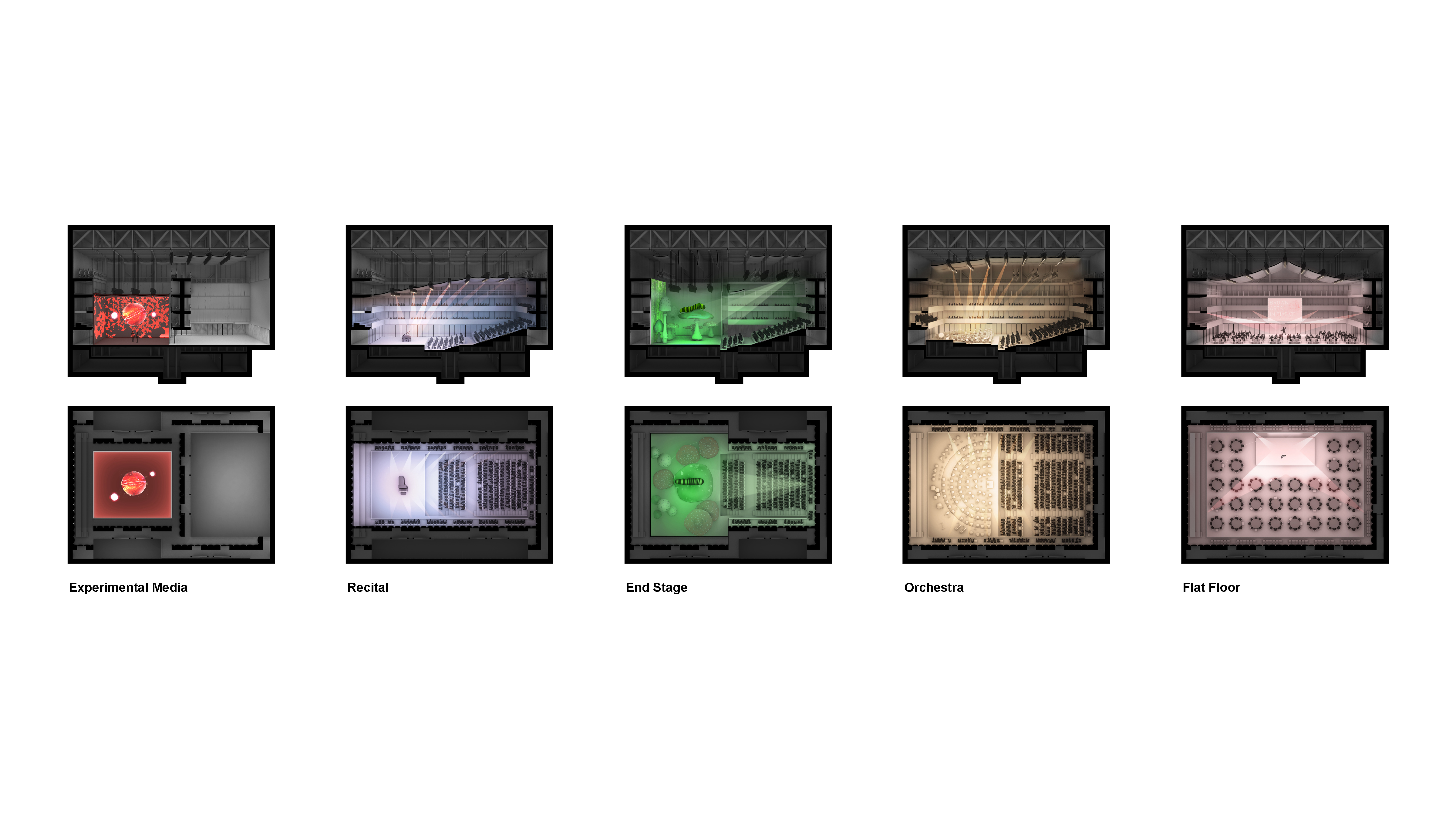
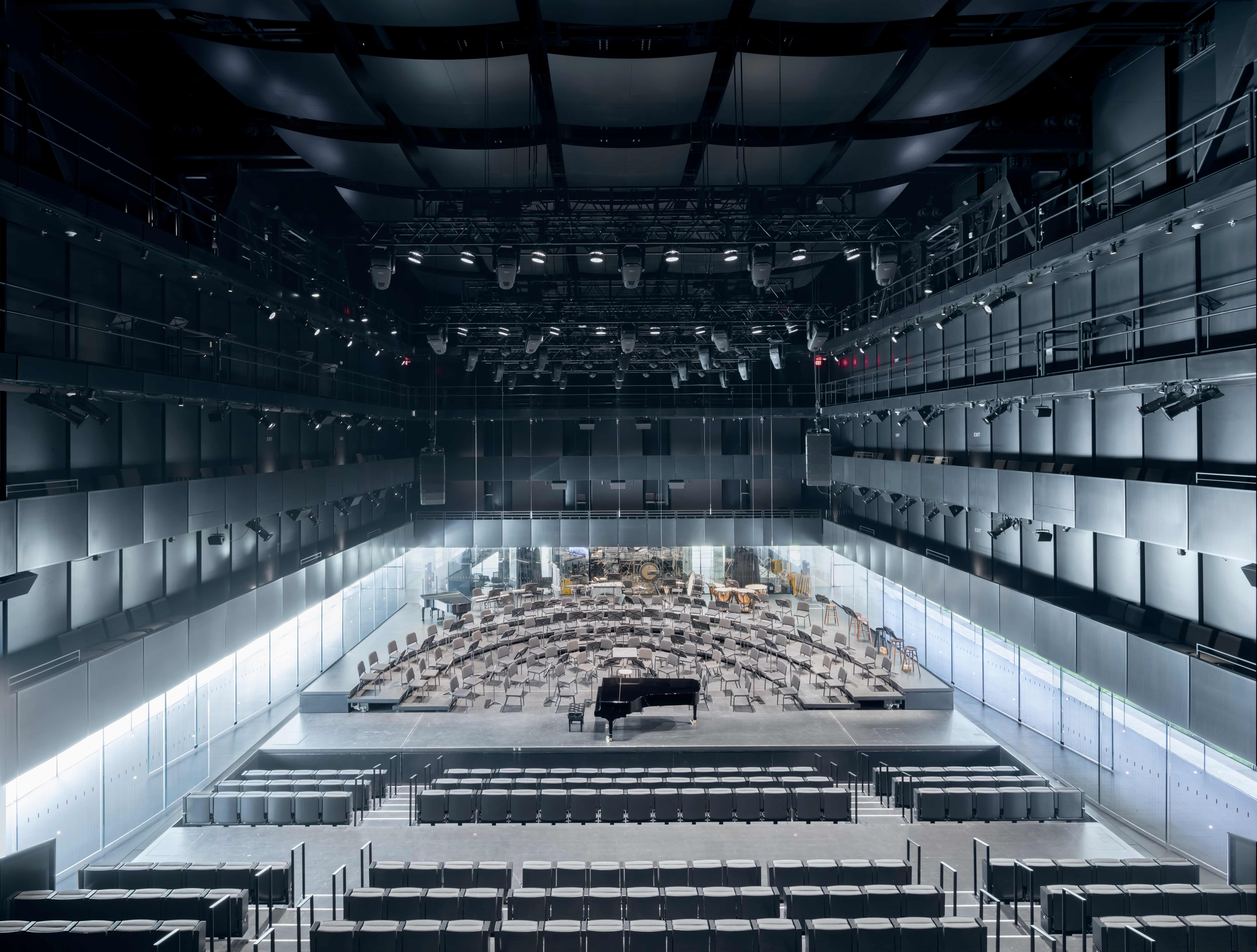
The building’s main hall transforms amongst Experimental Media, Recital, End Stage, and Flat Floor configurations—and an array of potential secondary modes—while maintaining intimacy for up to 350 audience members, and also offers an Orchestra configuration for joint performances by Brown’s renowned 100-piece symphony orchestra and 80-singer chorus for an audience of 530 people.
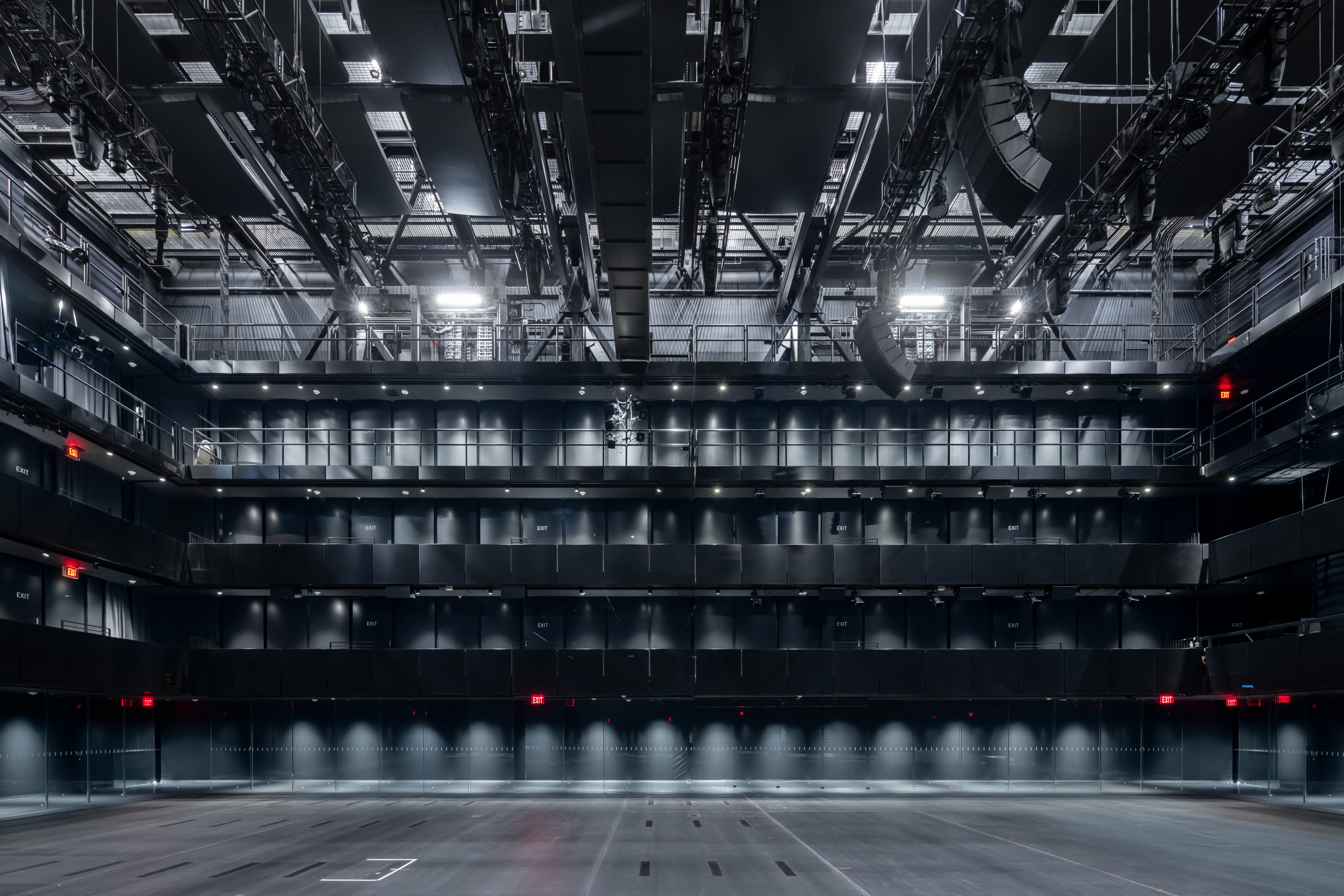
To address such a wide range of spatial, acoustic, and technical needs, all six surfaces of The Lindemann’s shoebox-shaped main hall …
… modulate physically and acoustically through automated performance equipment. These include: (walls) seating gantries and a perimeter ring of retractable acoustic curtains; (ceiling) adjustable acoustic reflector panels, motorized utility battens, and lighting bridges; and (floor) stage lifts, seating wagon lifts, and numerous stage risers and seating wagons. This advanced adaptability has earned The Lindemann the reputation of the most automated performance hall in the world.
“The Lindemann is taking theater architecture into new territory, pushing the notion of flexibility to its limits; to the point where you wonder if the whole idea of a theater—or any building for that matter—might be changing with it.” – Sam Lubell, The New York Times
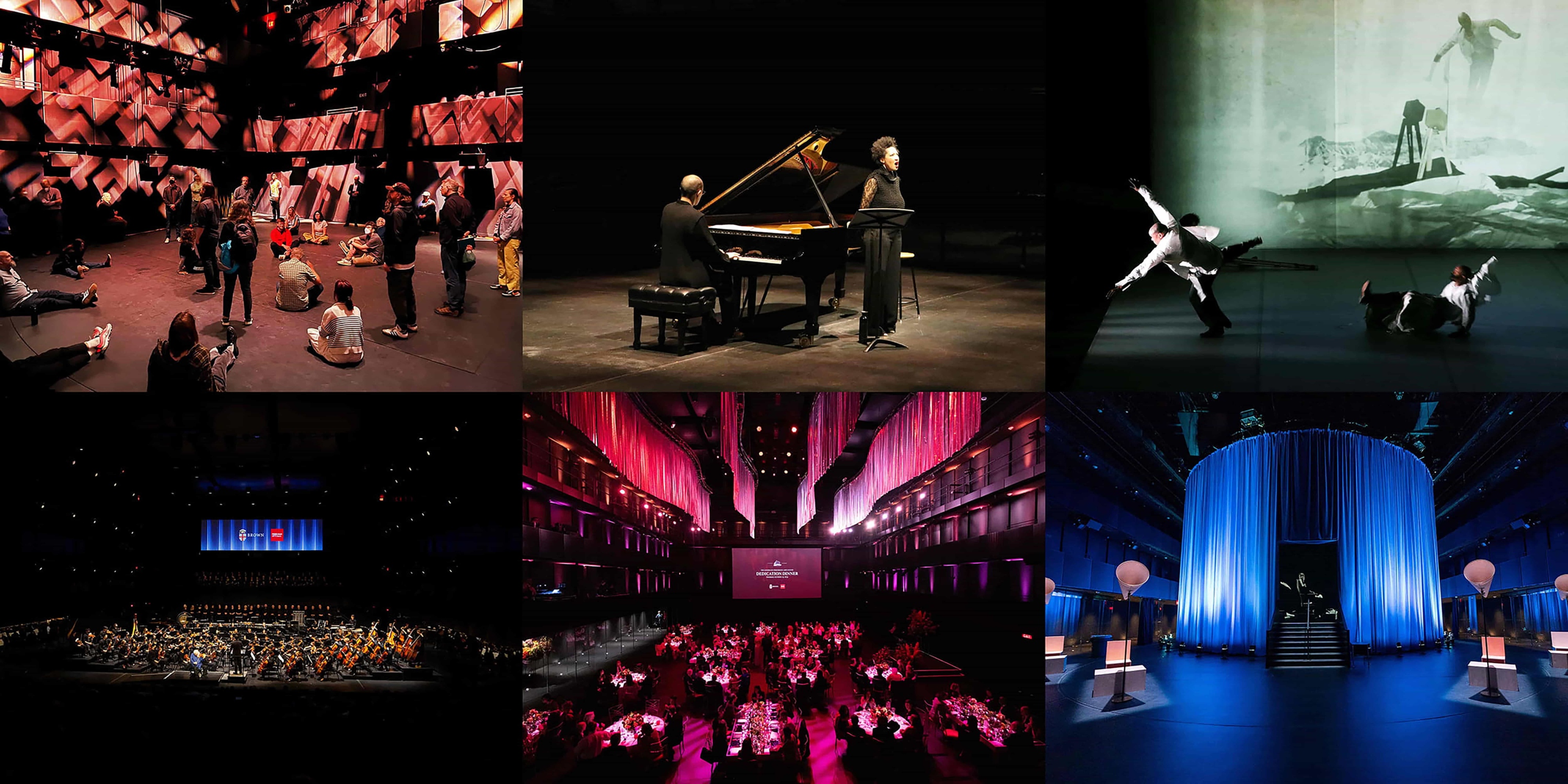
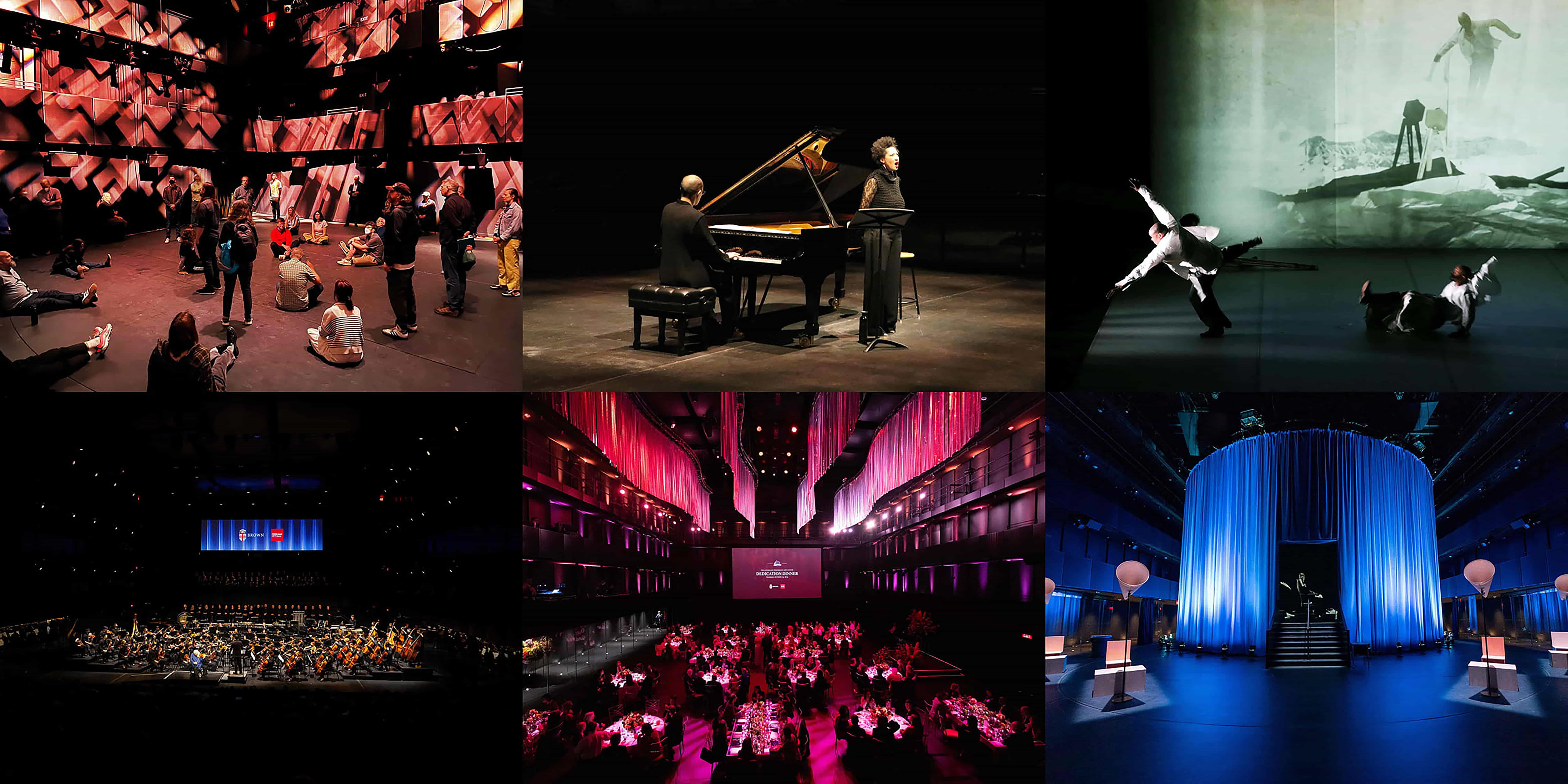
(Clockwise) Ambisonic performance by Butch Rovan; Julia Bullock recital; White Box dance performance; Carrie Mae Weems cyclorama: The Shape of Things; opening banquet; and opening night concert with Itzhak Perlman

While The Lindemann is a new, state-of-the-art typology, the equipment installed to make its many transformations possible is largely adapted from other industries’ warrantied technology. For example, the hall’s five seating balconies (painted white above) are moved using shipping gantries suspended from the building’s main structure. The structure itself is essentially a simple bridge (rust-colored elements above).


Similarly, the forty adjustable ceiling reflector panels (mock-up above) can be individually or collectively “tuned” like a musical instrument to create different acoustic signatures, or shaped to make spatial effects, using technology adapted from television’s computer-controlled, cable-suspended “skycam” systems.
And the egress paths from the different balcony configurations are maintained using telescoping drawbridges, re-engineered from retractable components of fire trucks.
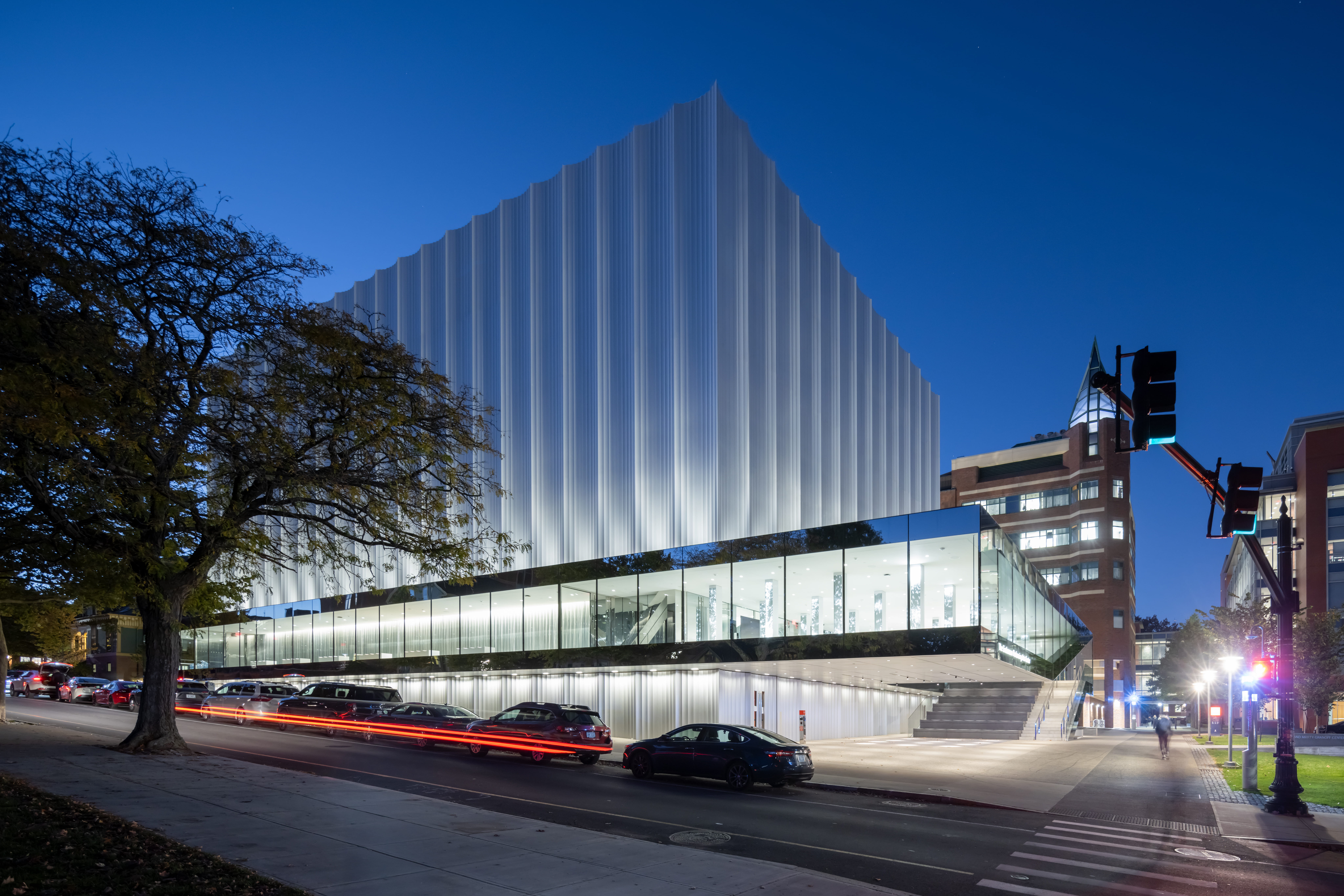

Embodying BAI’s mission of cross-disciplinary collaboration and exposure to the constant creation of art, a stage-level clerestory slices through the entire building, …
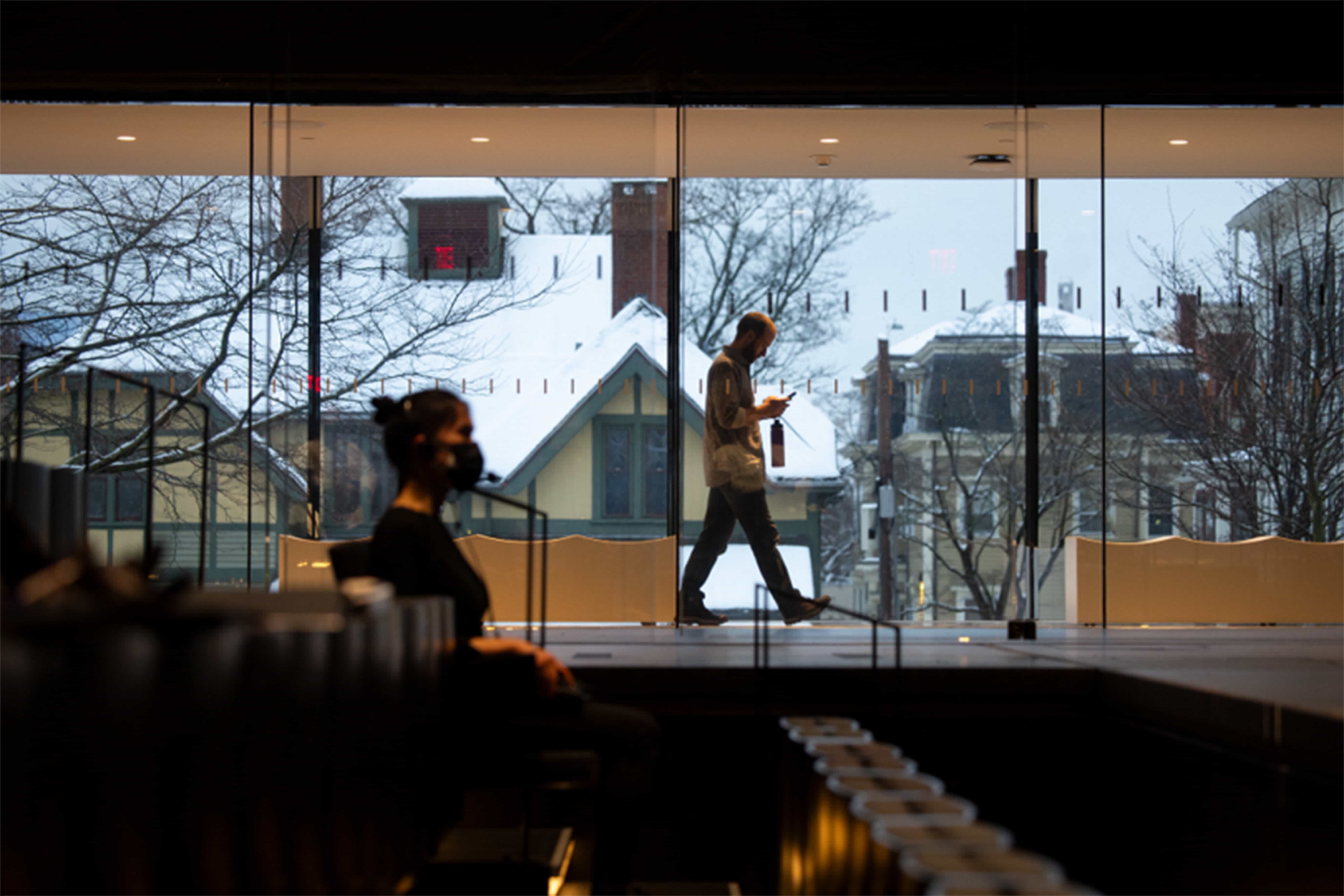
… allowing—when desired—performances, rehearsals, and research to spill out onto campus, and for the university at large to vicariously engage the constant creation of art.

In the clerestory, the stage-level acoustic volume is established with a rectilinear glass enclosure of 50 mm laminated, frameless glazing, the mass of which provides a warm, full-frequency reflection of musical sound (1). A second, inner line of similarly detailed glass arcs—suspended from, and moving with, the balconies—are shaped to distribute sound throughout the hall (2).

Openings between the arcs allow a portion of the sound to escape into the void beyond, helping to control loudness while sufficiently containing acoustic energy for an engaging, immersive experience.
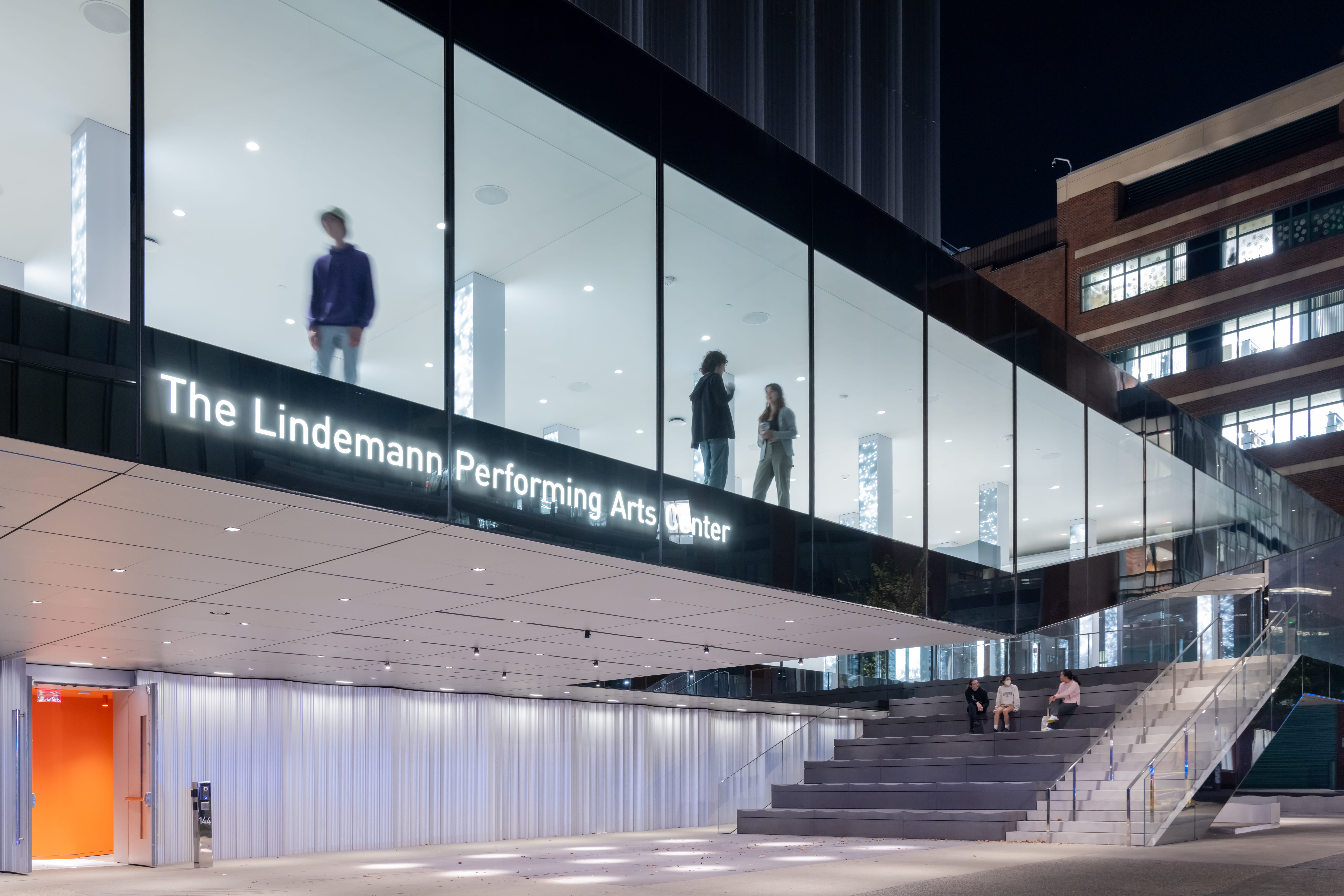
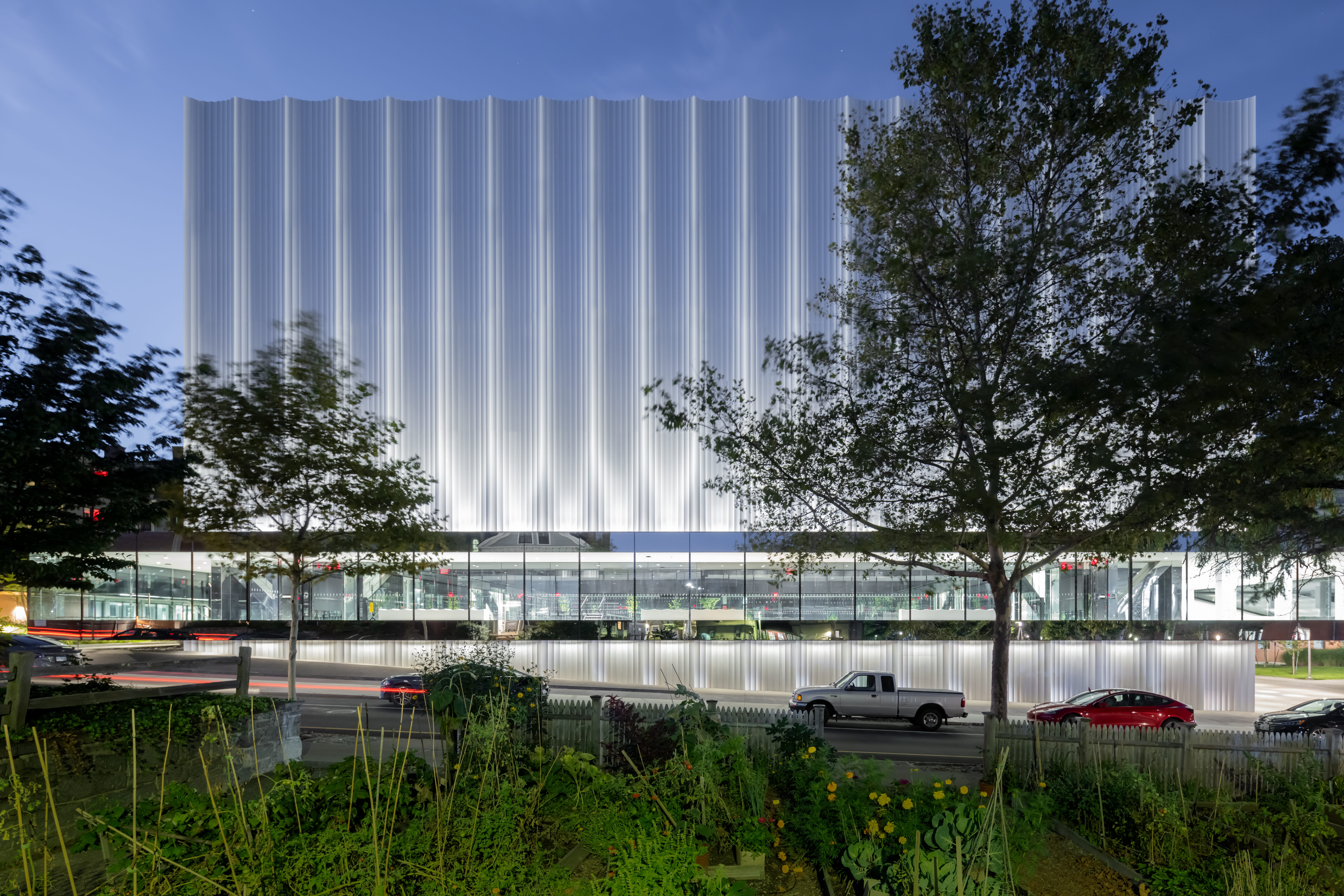
One story up from the street, the clerestory cantilevers on three sides of the building, …
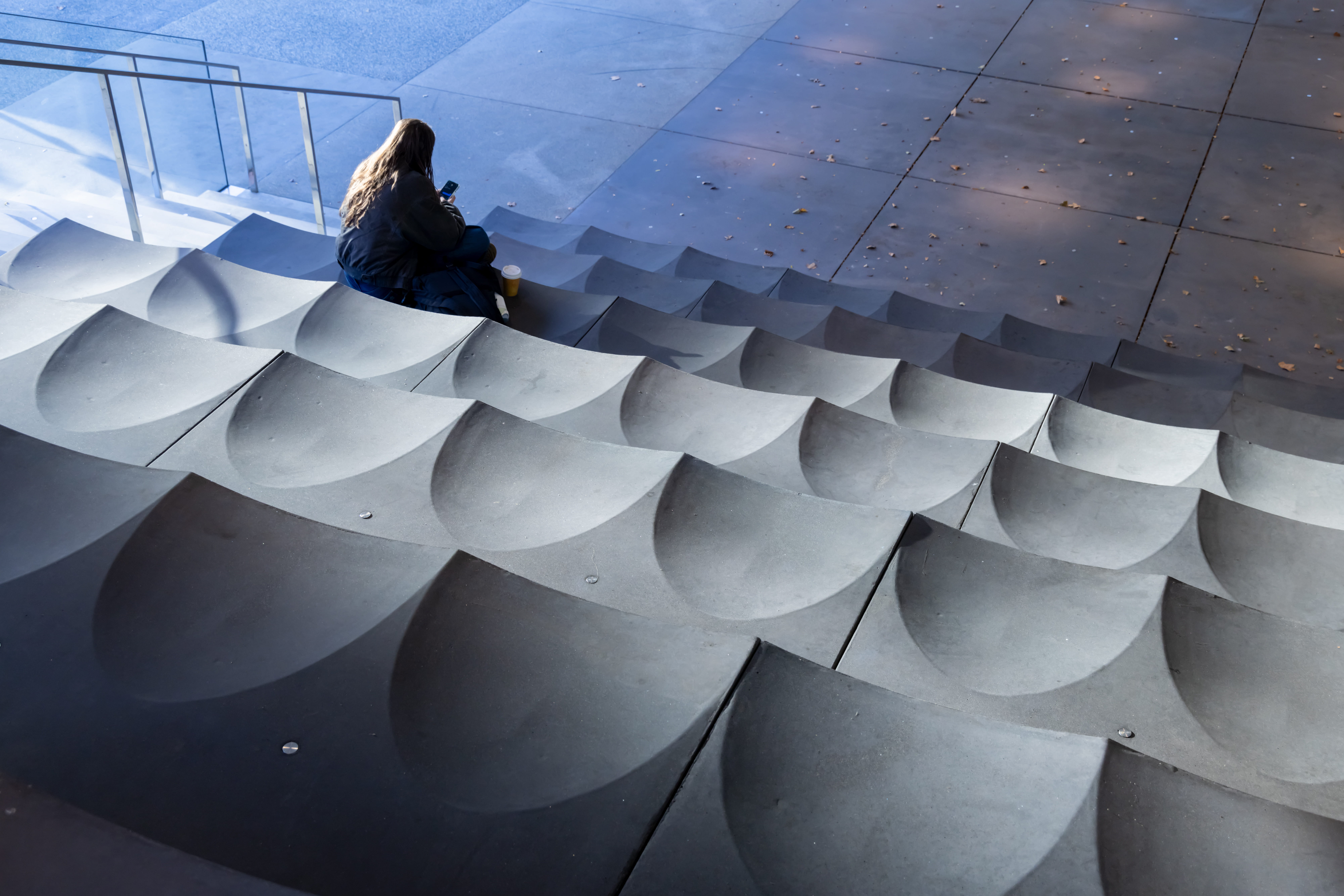
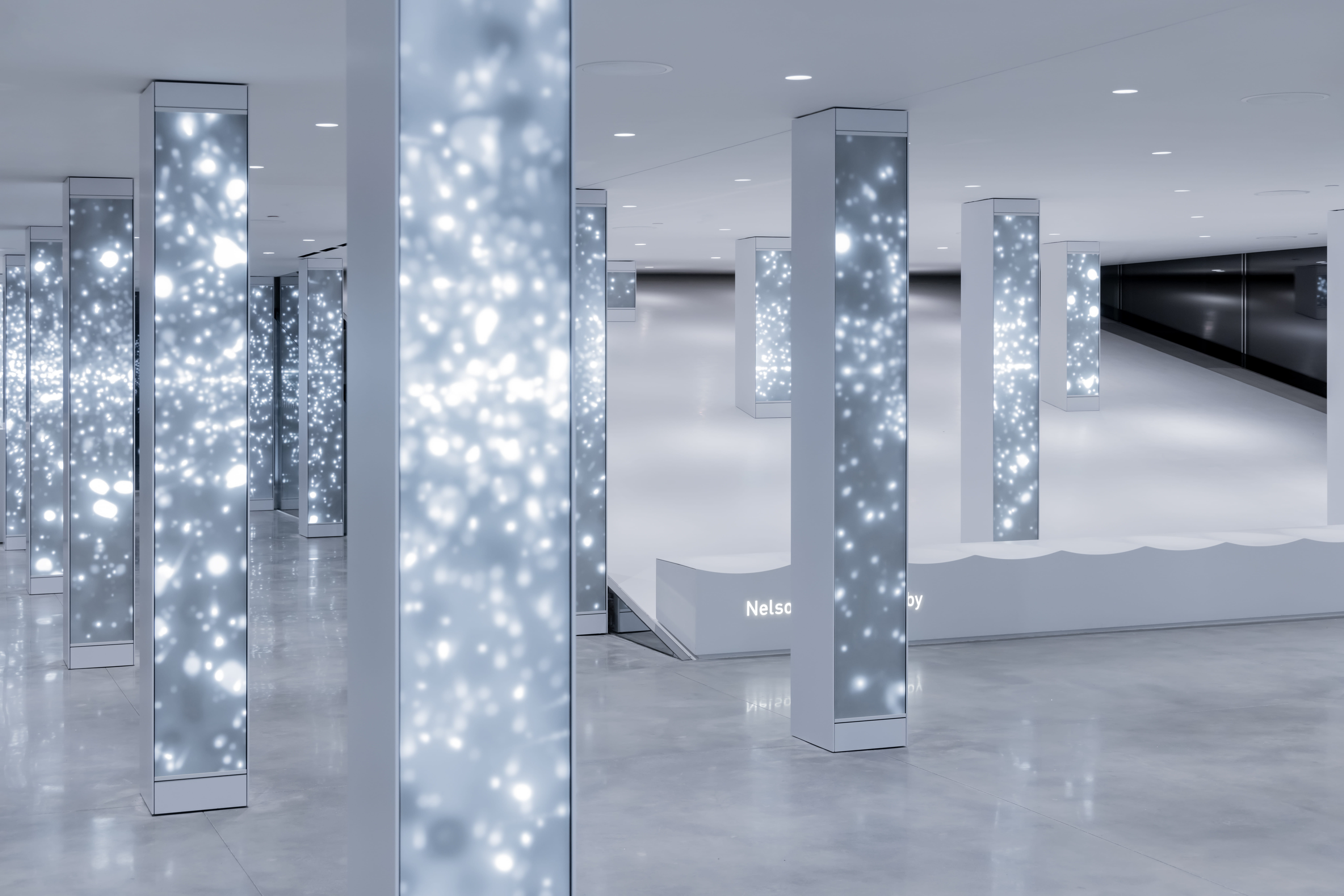
… while inside the building it houses the Diana Nelson and John Atwater Lobby, a promenade with direct views to the main hall, and an assembly area for performers that can serve as a more intimate lobby. “Infinite Composition,” a light art installation by Leo Villareal, is integrated into the elevated lobby’s structure.
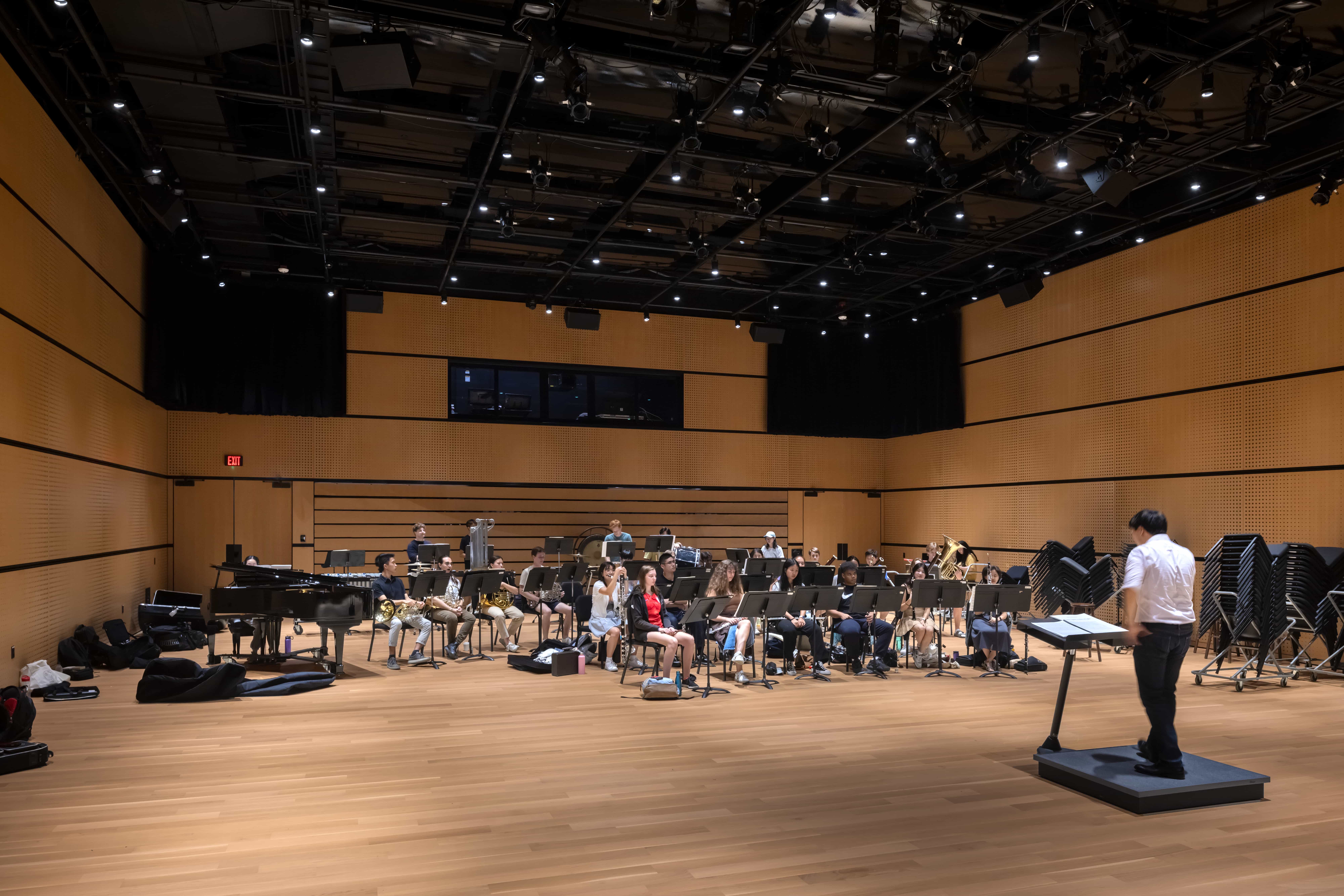
In the lower levels, an orchestra rehearsal room doubles as a 135-seat performance space for smaller ensembles; a dance rehearsal room also serves as a 98-seat informal dance performance space; …
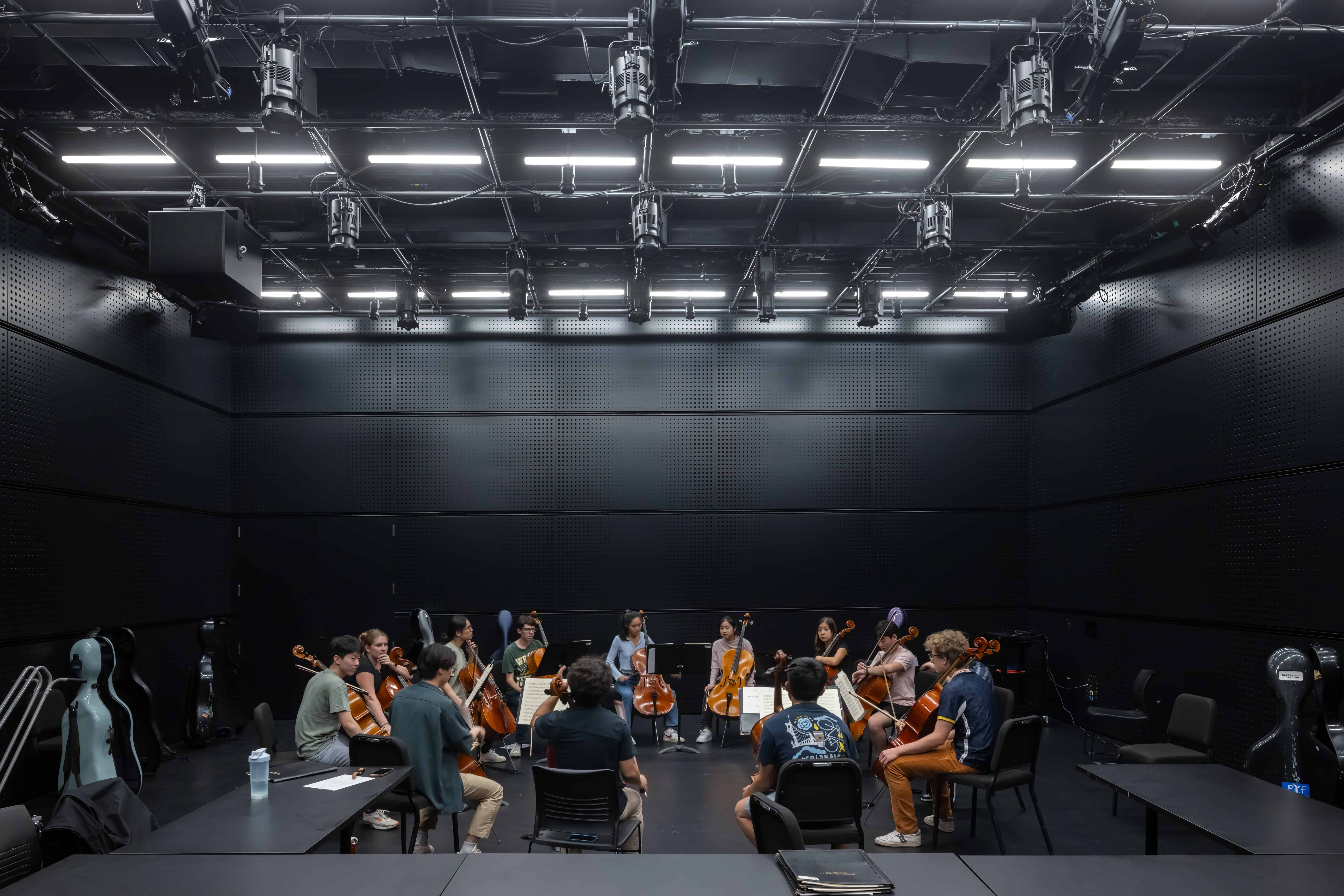
… and a theater rehearsal room twins as an intimate 50-seat performance space.