McDONALD’S FUTURE RESTAURANT PLATFORM
CLIENT McDonald’s Corporation
PROGRAM Worldwide restaurant prototype that responds to market demographics, site conditions, and changing needs over time
STATUS Completed Concept Design 2012; canceled 2013
ARCHITECTS REX, OpenShop
PERSONNEL Stephen Baron, Adam Chizmar (PL), Matt Choot, Danny Duong, Luis Gil (PL), Adam Hayes, Alysen Hiller (PL), Gabriel Jewell-Vitale (PL), Mark Kroeckel, David Maple, Joshua Ramus, Ashley Reed, Cristina Webb (PL)
CONSULTANTS Front
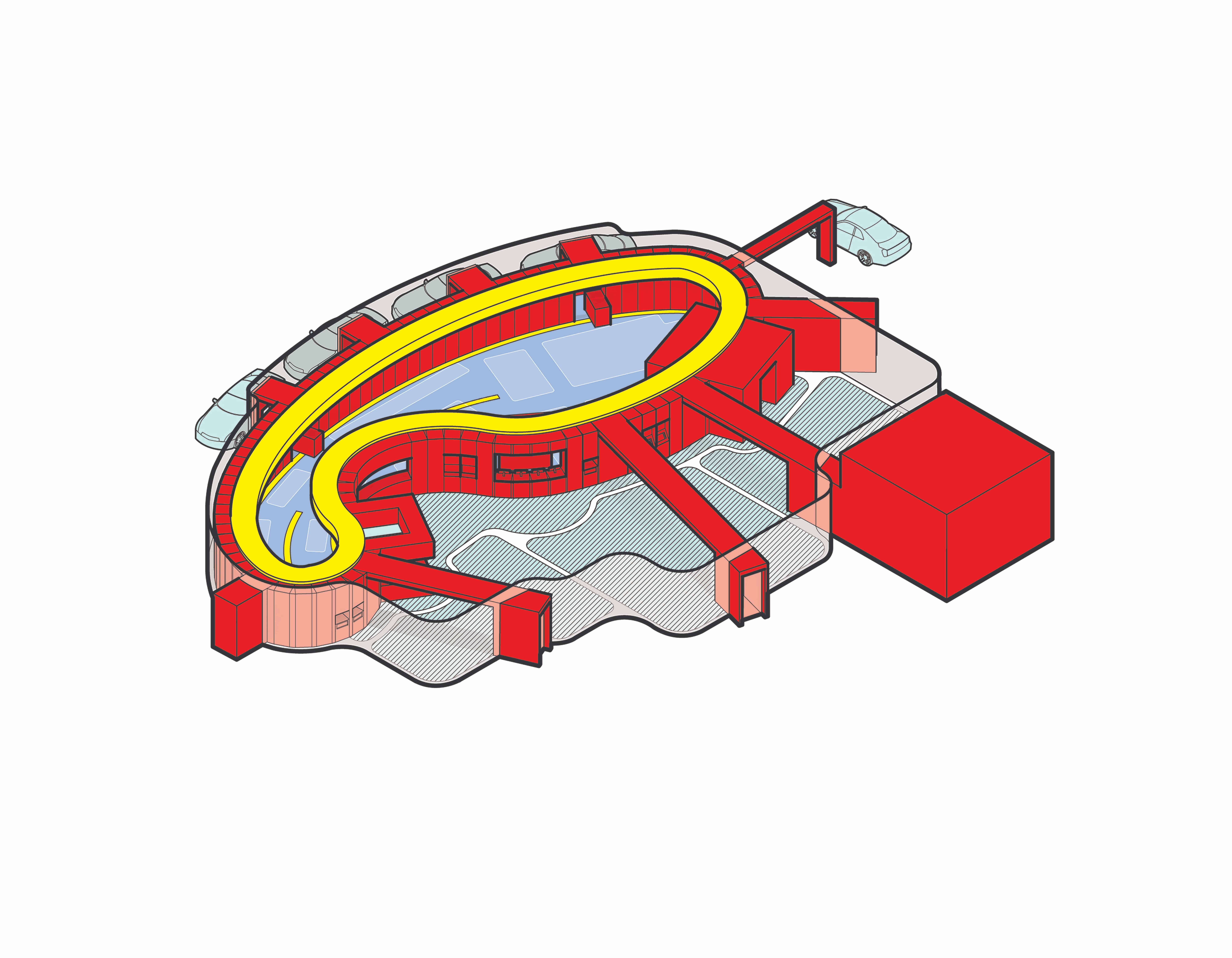
At McDonald’s inception, the entire restaurant platform—including kitchen, service strategy, architecture, and site—was holistically innovative. Bold innovation was McDonald’s brand.
As McDonald’s moved to mass production, its architecture became a decorated shed and innovation was limited to the kitchen and service areas. The concept of the QSR “box” replaced innovation as the core of McDonald’s brand.
With McDonald’s new focus on market optimization, a strategy that reprioritizes innovation is demanded, one that asserts McDonald’s bold innovation as the center of customer experience.
The Future Restaurant Platform will enable each restaurant to be optimized for market demographics and site conditions, and to be adaptable to changing needs over time.
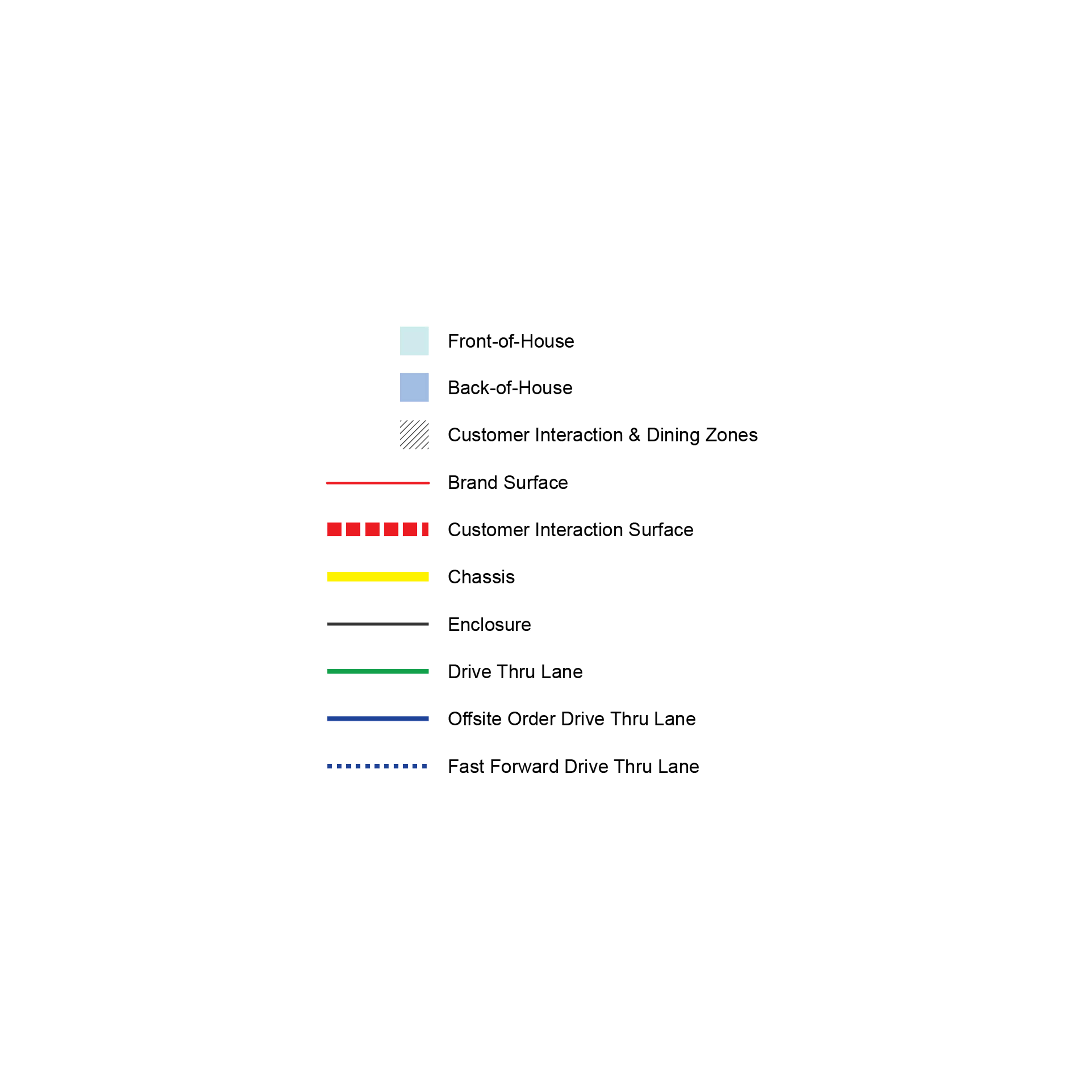

Originally, McDonald’s brand and customer interaction surfaces were one and the same. Innovation was McDonald’s brand and was equally manifest around the restaurant’s entire perimeter.
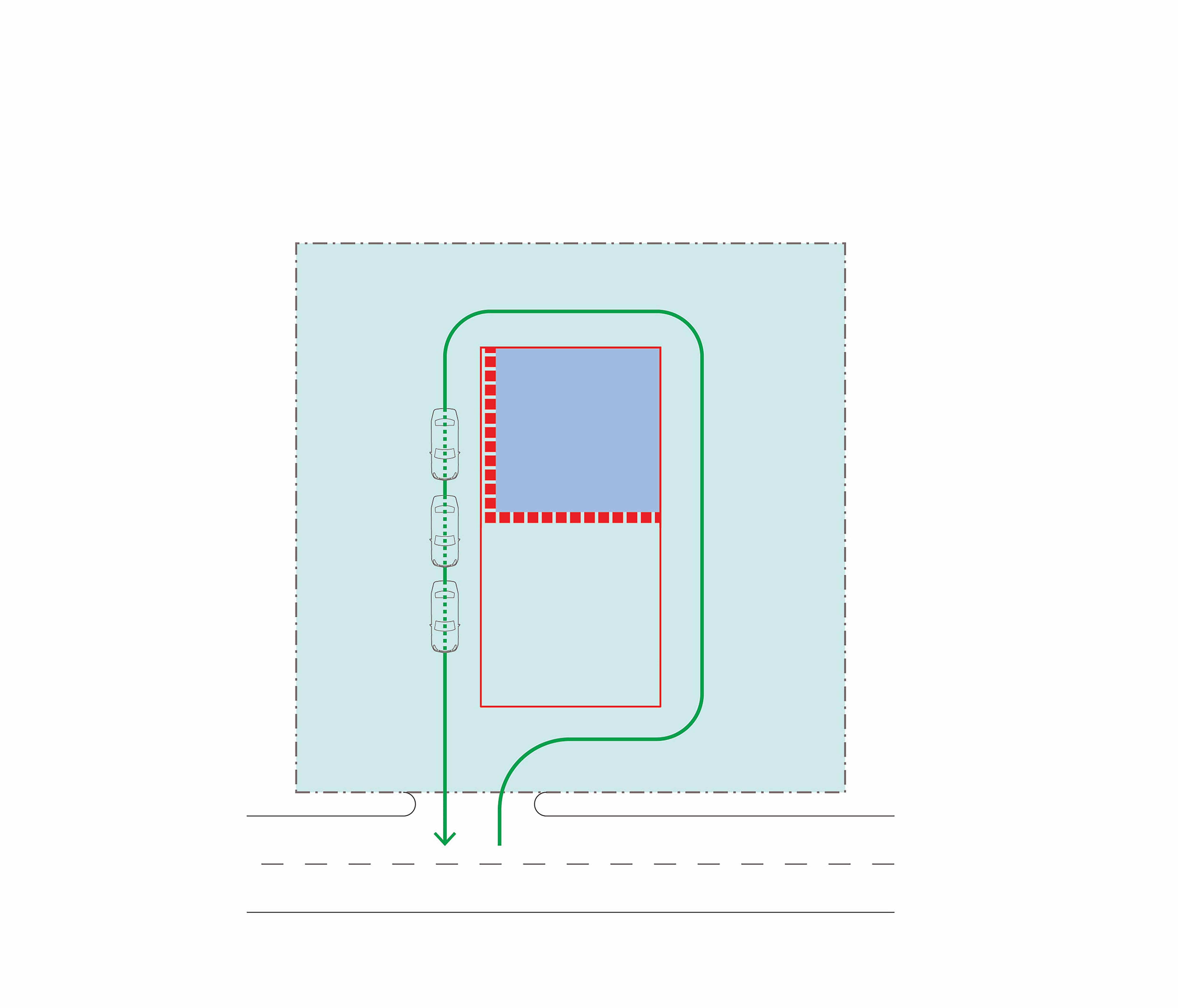
The introduction of the QSR “box” divorced these surfaces, placing the brand surface to the exterior and—for the most part—the customer interaction surface to the interior. As the new brand expression of McDonald’s, the box’s architectural shape trumped concerns of site efficiency, and innovation was relegated to the interior. Further, the placement of the Drive Thru lane forced walk-in patrons to cross a queue of vehicles.
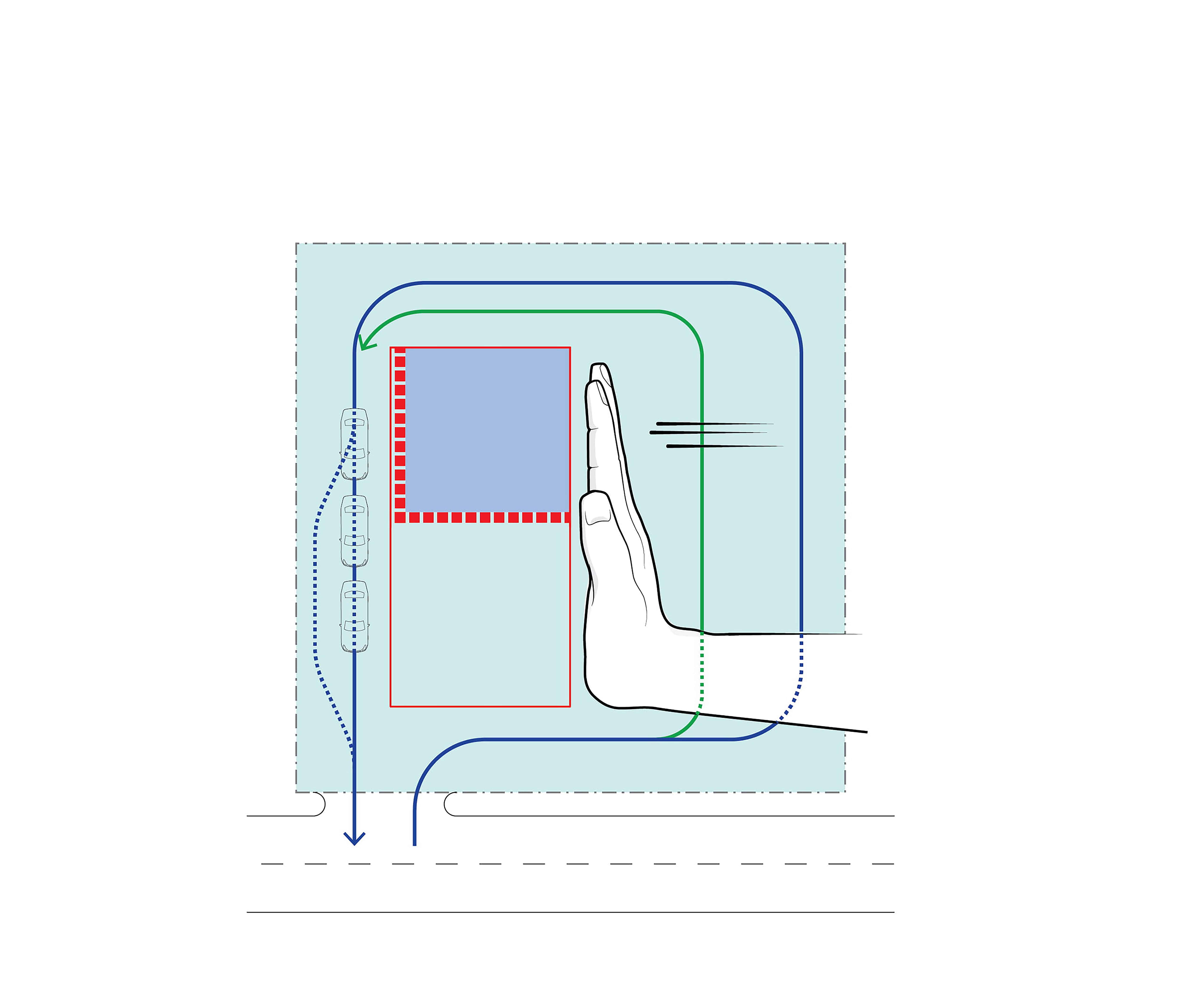
By pushing the building to the site’s perimeter, revenue-generating area (Drive Thru lanes and parking) is increased, an independent Offsite Order Drive Thru lane is created, and connectivity between building and parking is improved. A Fast Forward lane is also added.
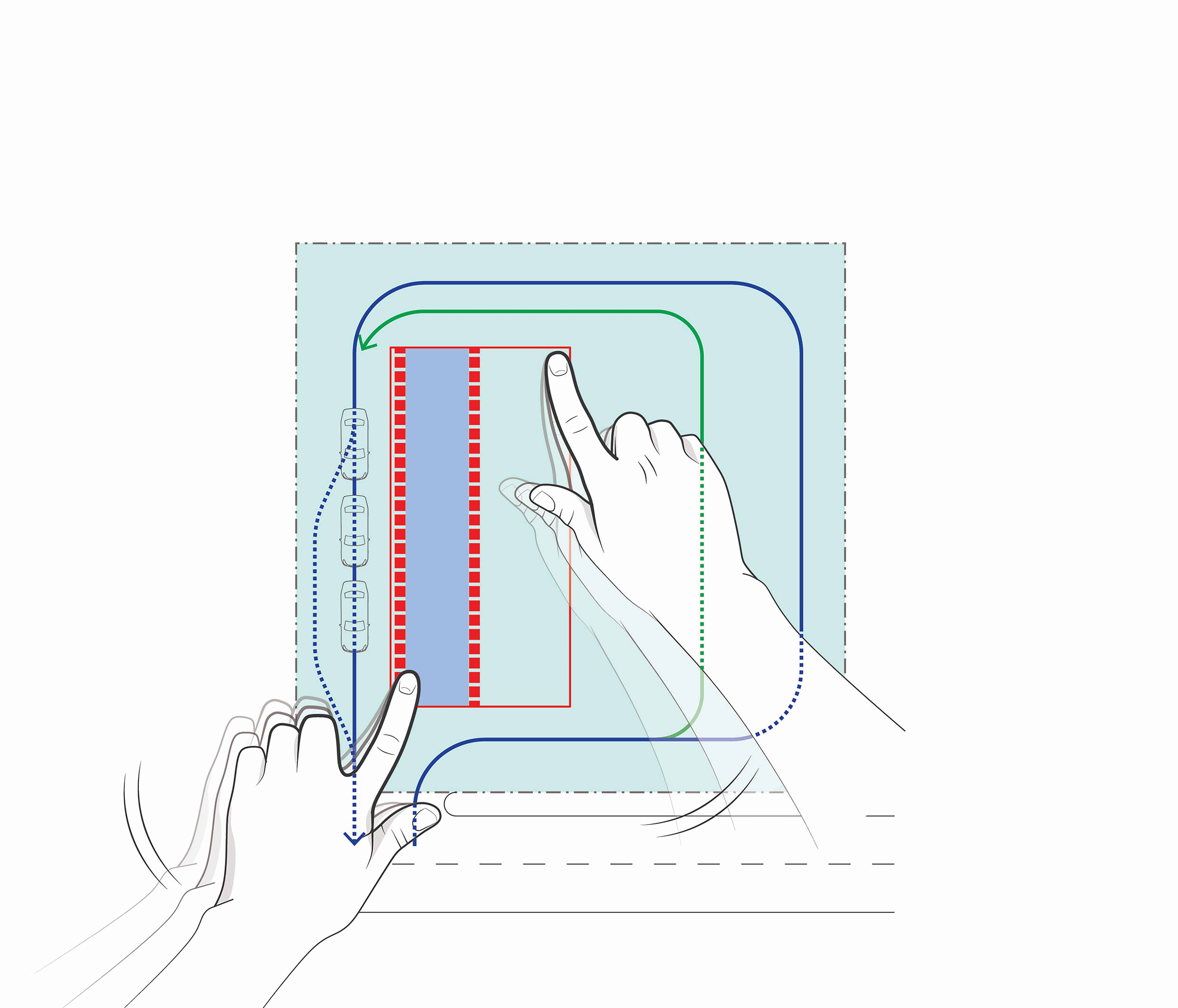
Rotating the building’s orientation by 90 degrees increases the customer interaction surface for both walk-in and Drive Thru patrons and orients the main entry toward the majority of the site.
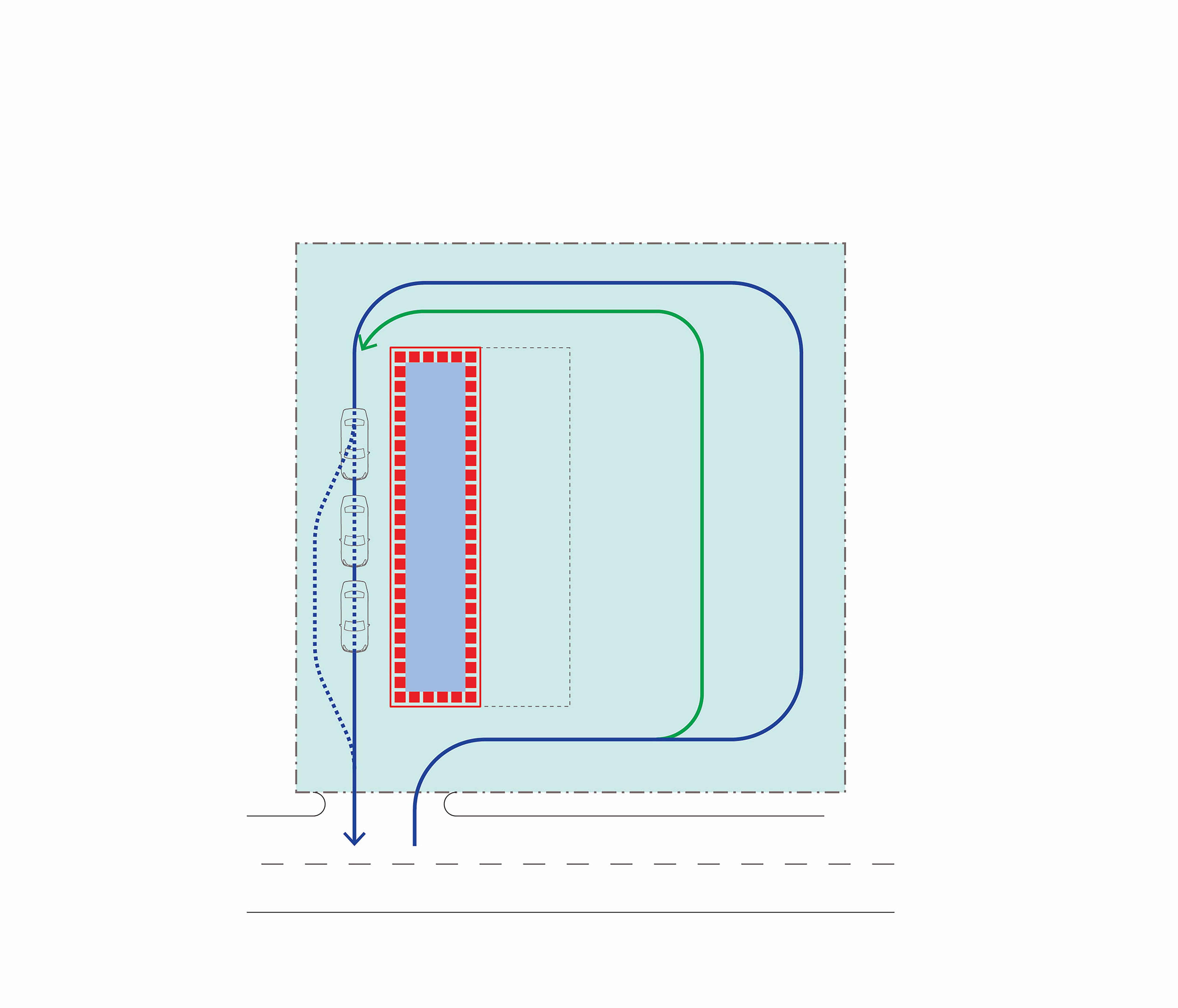
The brand and customer interaction surfaces are recombined, and the importance of the Drive Thru patron is re-elevated to that of the walk-in patron. The building’s entire perimeter is innovative again.

To emphasize the universality of the Future Restaurant Platform’s diagram, it is abstracted into a circle. While rectilinear buildings certainly remain possible, McDonald’s is no longer automatically “boxed in.”

An Assembly “pinch point”—respecting the five-foot triangle rule—is formed at approximately one-third of the building’s length, optimizing both Drive Thru and in-store operations by increasing the brand/customer interaction surface at the crucial walk-in order and present location.
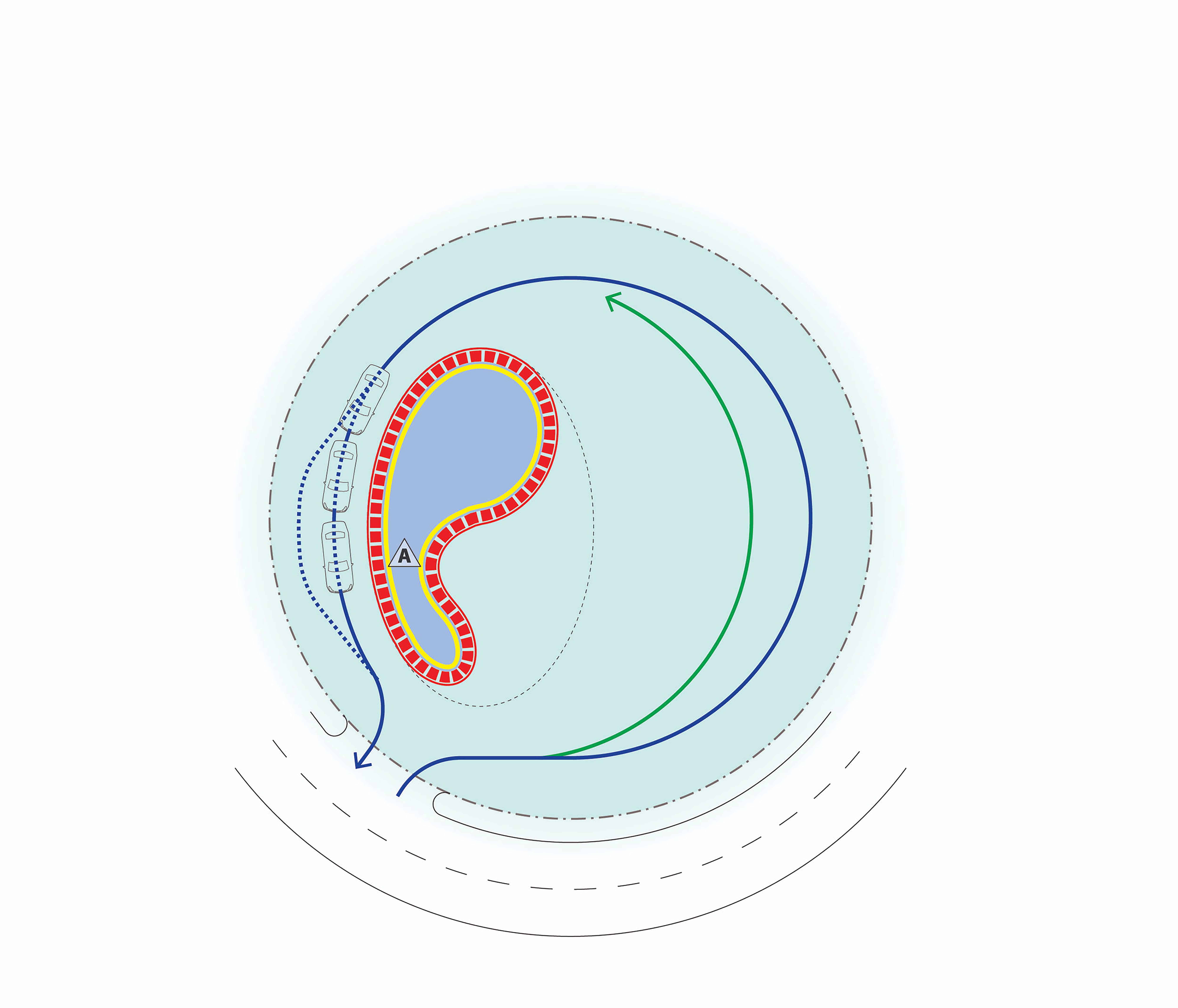
The “Chassis”—an infrastructural supply loop—is constructed along the line of the brand/customer interaction surface.
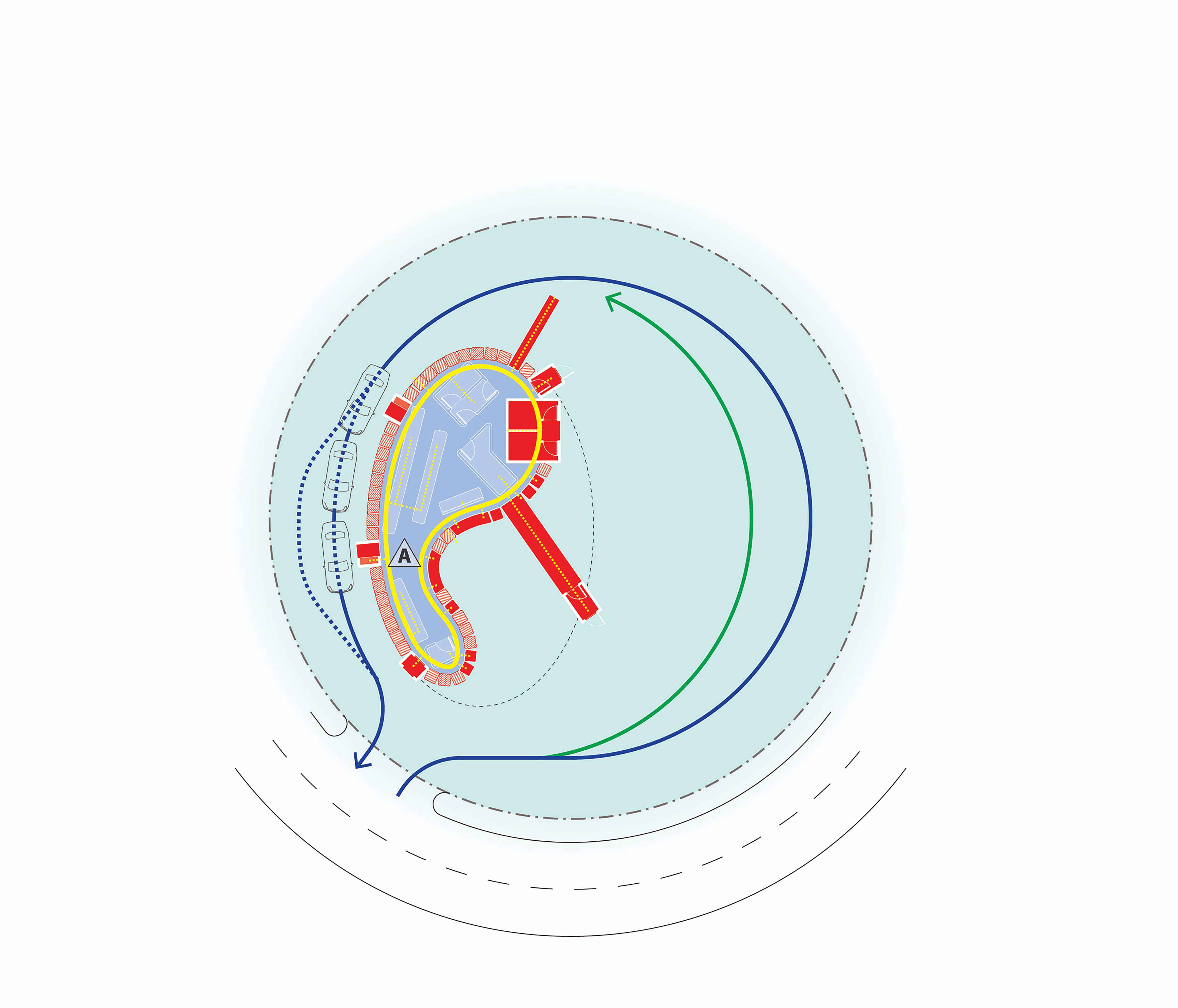
The “Coachworks”—individual brand/customer interaction points—are connected to and supplied by the Chassis. Their dimensions are ordered but variable, such that they can change over time without additions looking foreign or “tacked on.” A new architectural language is thereby created, which embraces McDonald’s constant innovation, allowing continuous improvement without appearing haphazard.

Unlike the QSR box, the Coachworks plan is highly adaptable across different sites (by bending the loop) …


A transparent Enclosure wraps the Coachworks and Zones, such that the brand/customer interaction surface remains visible from all directions.
As customer needs and pathways evolve, Coachworks can be switched, added, or extended, and the entire brand/customer interaction surface can be locally increased. A localized expansion of the brand/customer interaction surface can also accommodate small increases in back-of-house operations.

Because the Chassis can be accessed from above and below, the Future Restaurant Platform can also accommodate two-story applications.
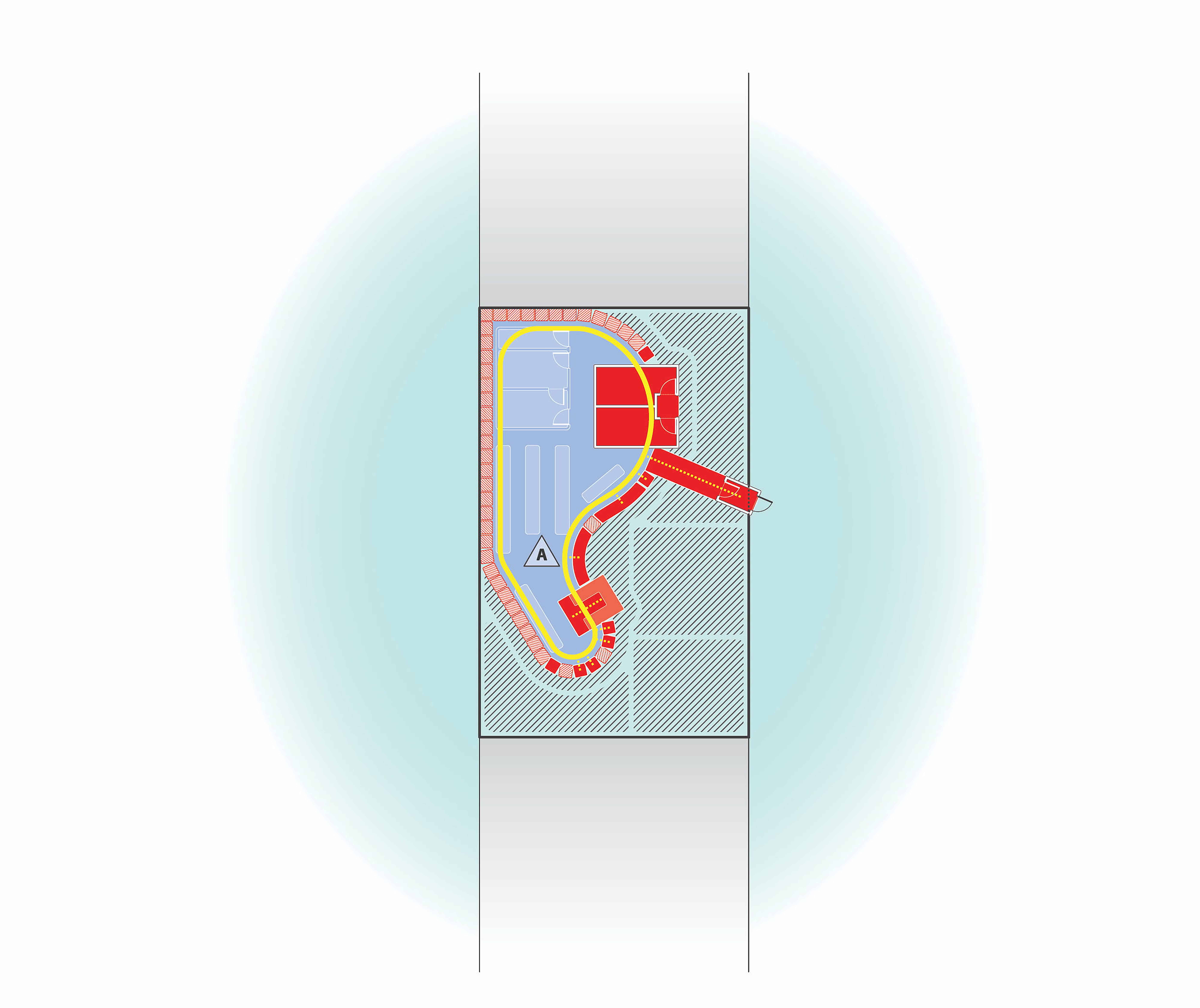
Since the Future Restaurant Platform relies on the Coachworks—not the QSR box—to create the branding surface, it can be potently applied to in-line restaurants as well.

While the adaptability of the Future Restaurant Platform allows for an infinite number of arrangements, …
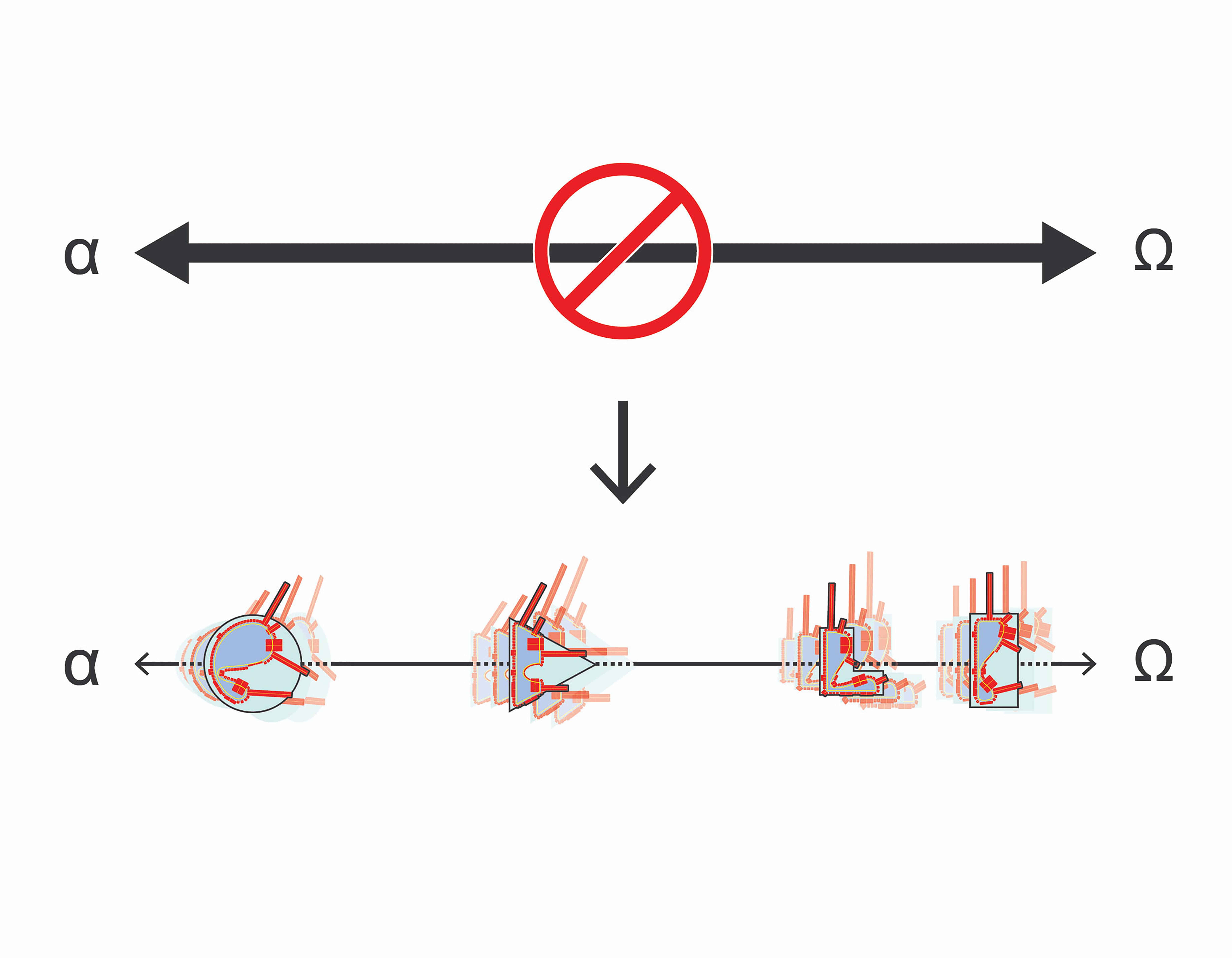
… universal flexibility is not needed. Rather, a series of highly vetted “pre-sets” will be determined, each of which can be adjusted to allow for further variation.
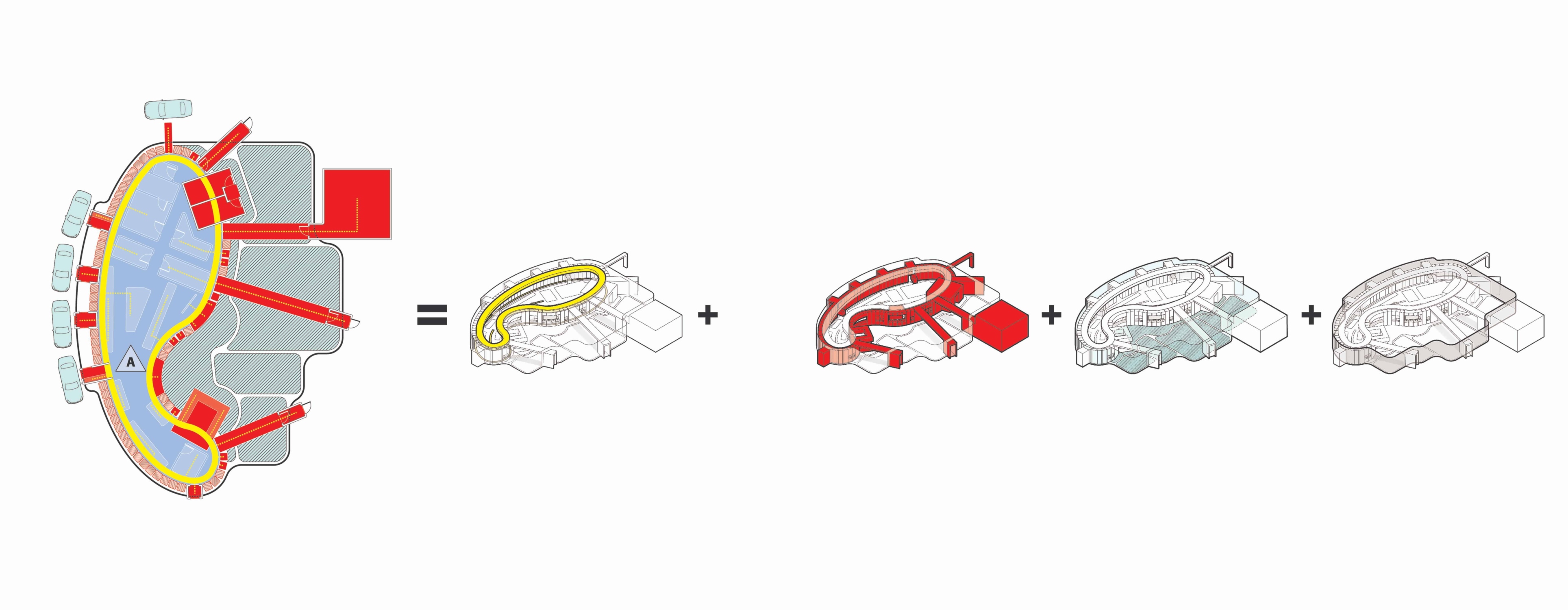
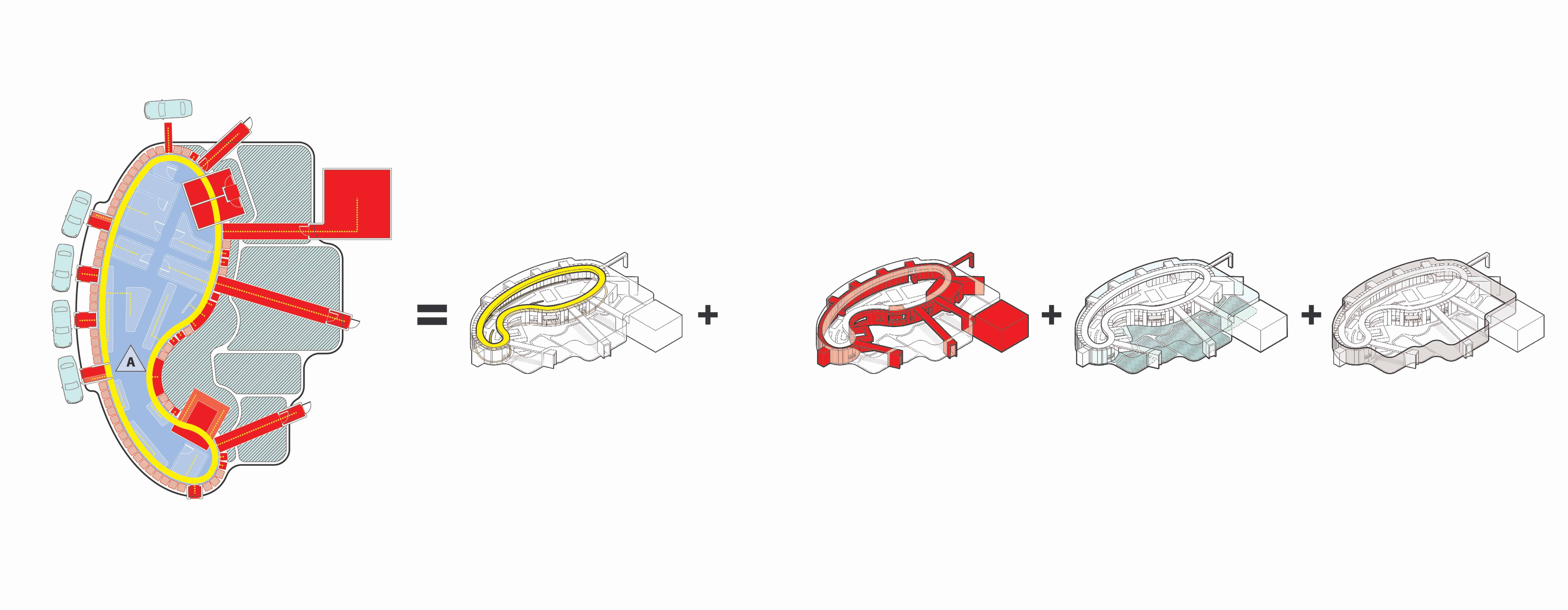
An adaptable whole is created from a series of adaptable components.
Continue to CHASSIS.
Image credits: 1 © Luxigon; all others © REX